









What's Happening?
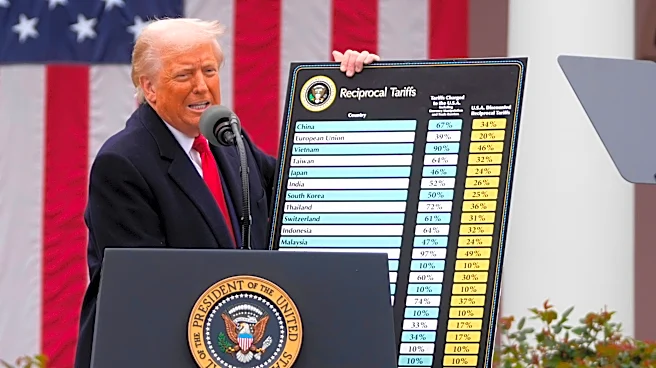
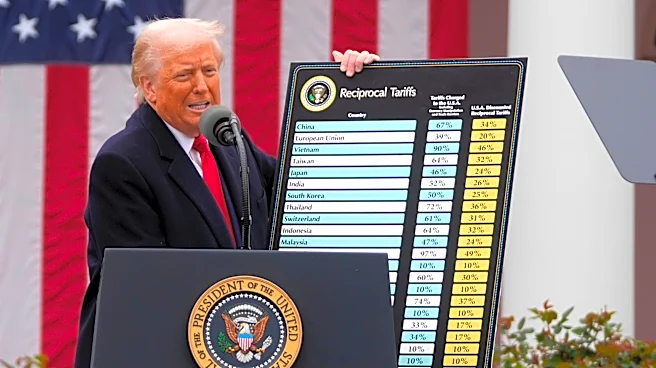
President Trump has announced new tariffs of 50% on certain Canadian exports, invoking a rarely used provision of the Tariff Act of 1930. The tariffs target Canadian products such as alcoholic beverages, dairy, and vehicles, citing discriminatory practices
against U.S. trade. The move is part of ongoing trade tensions between the U.S. and Canada, with Trump using the tariffs as leverage in negotiations. Canadian officials may challenge the tariffs legally, arguing they are retaliatory measures in response to Trump's trade policies.
Why It's Important?
The imposition of these tariffs could significantly impact trade relations between the U.S. and Canada, potentially leading to increased costs for consumers and businesses. The tariffs may strain diplomatic relations and affect industries reliant on cross-border trade. The use of the Tariff Act of 1930, historically linked to the Great Depression, raises concerns about the economic implications of such measures. The decision underscores the complexities of international trade and the potential for economic disruption when tariffs are used as a negotiation tool.
What's Next?
Legal challenges from Canada are likely, as officials contest the validity of the tariffs. The situation may escalate into a broader trade dispute, affecting negotiations related to the Canada-U.S.-Mexico Agreement (CUSMA). Businesses affected by the tariffs may seek alternative markets or adjust their supply chains to mitigate impacts. The U.S. administration may explore additional trade measures, while Canadian officials work to resolve the dispute through diplomatic channels. The outcome of these negotiations will be closely watched by stakeholders in both countries.