
What's Happening?
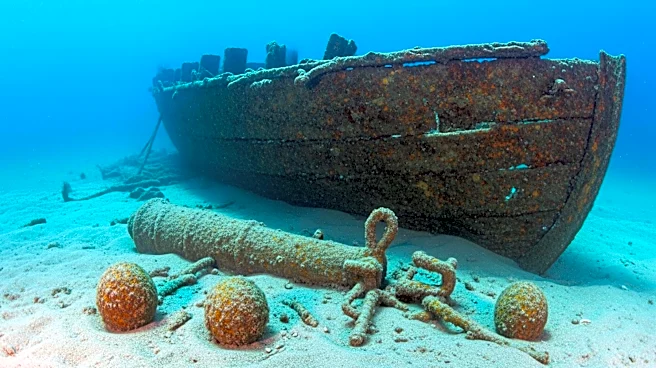
Danish archaeologists have uncovered the remains of the Dannebroge, a Danish flagship that sank during the Battle of Copenhagen in 1801. The discovery was made ahead of the construction of the Lynetteholm
project and announced on the 225th anniversary of the battle. The ship, which was part of the Danish-Norwegian forces, was heavily damaged, caught fire, and exploded during an attack by the British. The excavation revealed a range of artifacts, including personal belongings and a human lower jawbone, believed to belong to one of the 19 men reported missing from the battle. The dimensions of the ship's timbers and dendrochronological dating confirm the identity of the vessel.
Why It's Important?
The discovery of the Dannebroge provides significant insights into Danish history and naval warfare during the Napoleonic Wars. It highlights the historical significance of the Battle of Copenhagen, a pivotal event that shaped Denmark's national identity. The excavation also underscores the importance of preserving cultural heritage, as the shipwreck was only investigated due to planned construction threatening its site. This find contributes to a deeper understanding of maritime archaeology and the historical context of naval battles in the early 19th century.
What's Next?
The ongoing excavation may lead to further discoveries of artifacts and human remains, offering more insights into the lives of those aboard the Dannebroge. The findings could prompt additional archaeological investigations of other shipwrecks from the Battle of Copenhagen, potentially reshaping historical narratives. The Danish Viking Ship Museum may continue to collaborate with other institutions to preserve and study the artifacts, enhancing public understanding of this historical event.