



What's Happening?
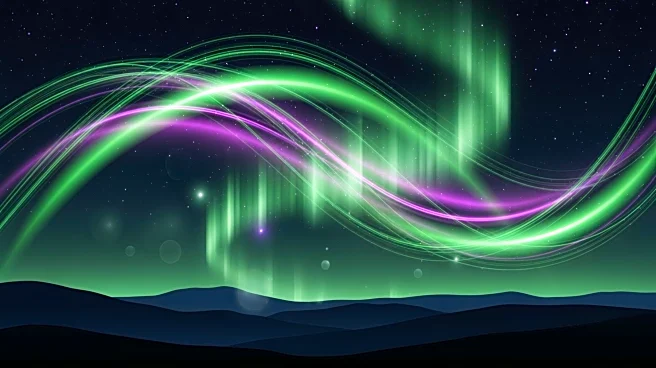
A significant coronal mass ejection (CME) is expected to impact Earth within the next 24 hours, potentially causing severe geomagnetic storm conditions. This event could make the northern lights visible much farther south than usual, possibly reaching
as far as northern California and Alabama. The CME, launched during a powerful X-class solar flare on January 18, is traveling at speeds between 620 and 870 miles per second. NOAA has issued a G4 (severe) geomagnetic storm watch, indicating that auroras could be visible in 24 U.S. states, including Alaska, Washington, and Colorado. The visibility of the auroras will depend on the magnetic orientation of the CME when it hits Earth.
Why It's Important?
The potential visibility of the northern lights across a large portion of the United States is a rare event, offering a unique opportunity for millions of Americans to witness this natural phenomenon. The geomagnetic storm could also have implications for satellite operations, GPS systems, and power grids, highlighting the importance of monitoring space weather. For scientists and enthusiasts, this event provides a chance to study the effects of solar activity on Earth's magnetic field and atmosphere. The widespread visibility of the auroras could also boost interest in astronomy and space science among the general public.
What's Next?
As the CME approaches, space weather forecasters and aurora chasers will closely monitor its magnetic orientation to predict the extent of the auroral display. If the CME's magnetic field aligns southward, it could enhance the visibility of the northern lights. Observers in the affected states are advised to find dark, unobstructed viewing locations and to use space weather apps for real-time updates. The event could lead to increased public interest in space weather phenomena and further research into the impacts of solar activity on Earth.