



What's Happening?
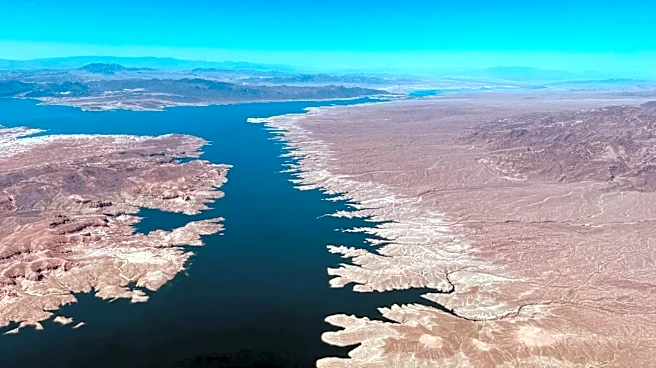
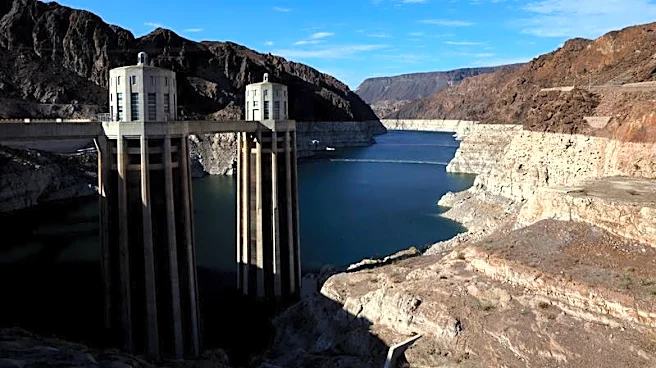
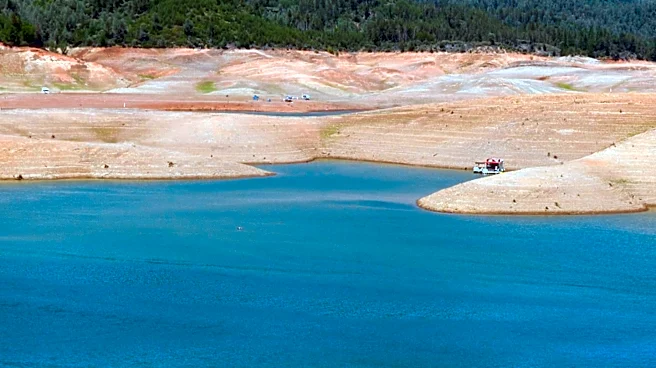
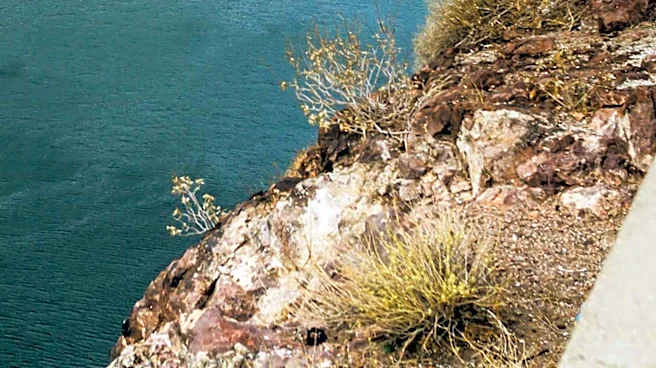
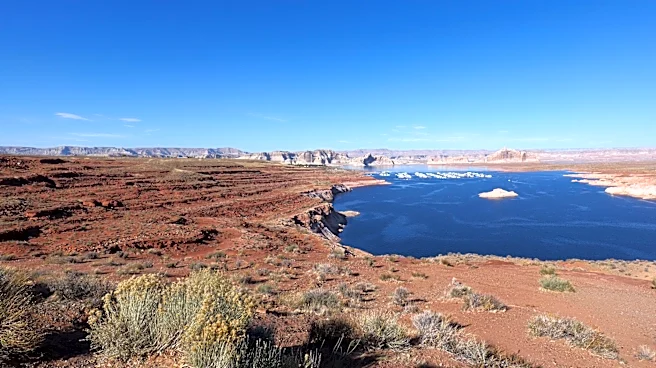
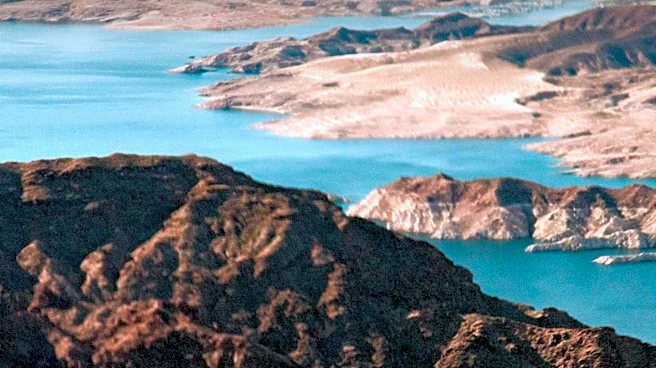
Lake Mead, a critical water source for Southern Nevada, is nearing a new record low water level, just inches away from its previous low set four years ago. As of July 27, 2026, the water level was recorded at 1,041.27 feet above sea level, close to the historic
low of 1,040.58 feet set in 2022. The decline in water levels is attributed to a combination of factors, including a record-low snowpack and reduced water flows into Lake Mead to protect Lake Powell's infrastructure. The Bureau of Reclamation has projected that Lake Mead could fall below its previous record by the end of the month, with further declines expected in the coming years.
Why It's Important?
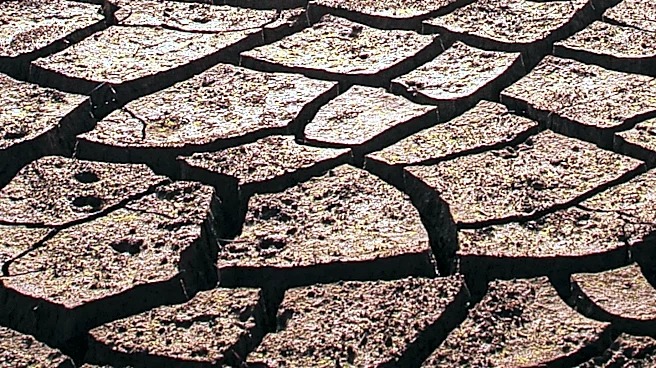
The decreasing water levels in Lake Mead pose significant challenges for water management in the region, affecting millions of residents and agricultural operations that rely on its supply. The situation underscores the broader issues of water scarcity and climate change impacting the southwestern United States. As water levels continue to drop, there could be severe implications for water allocation agreements and the sustainability of water resources in the region. This situation may prompt urgent policy discussions and potential federal interventions to address the water crisis.
What's Next?
If Lake Mead's water levels continue to decline, it may trigger emergency measures and renegotiations of water rights among states dependent on the Colorado River. Policymakers and environmental agencies will likely explore strategies to mitigate the impact of water shortages, including conservation efforts and infrastructure investments. The situation may also lead to increased public awareness and advocacy for sustainable water management practices.