




What's Happening?
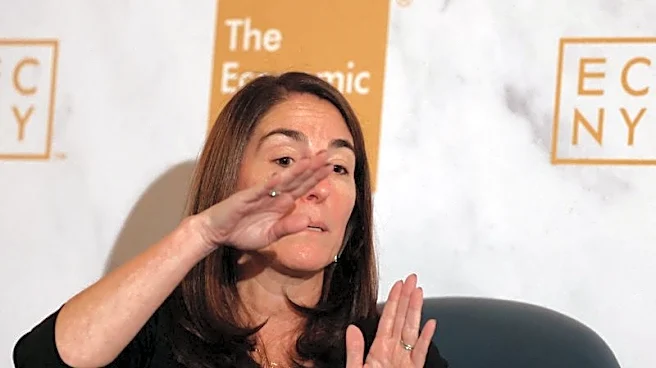
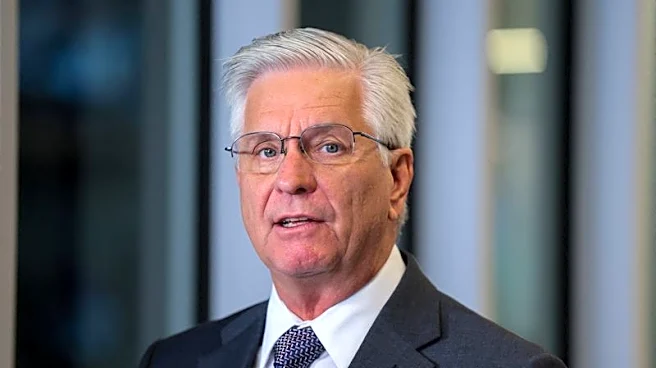
Beth Hammack, president and CEO of the Federal Reserve Bank of Cleveland, has called for the Federal Reserve to establish clear principles for intervening in the U.S. Treasury bond market. Speaking at the Brookings Institution, President Hammack highlighted
past turbulences in the $32 trillion Treasury market, specifically citing disruptions in March 2020 due to COVID-19 and in April 2025 following tariff news. She emphasized the need for proactive planning, stating that waiting until a crisis hits leaves little time to decide on operational principles or communication strategies. President Hammack suggested that the Federal Open Market Committee (FOMC) should carefully consider when and how to use its tools, proposing ideas for discussion. She underscored the critical role of the Treasury market, noting that its dysfunction can spread to the broader economy. According to President Hammack, rapid selling that depresses Treasury values, not due to intrinsic worth but market dynamics, is a problem a central bank is designed to address, as private markets cannot solve it independently.
Why It's Important?
President Hammack's call for pre-defined intervention principles is crucial for maintaining financial stability in the U.S. The Treasury market is foundational to the American financial system; disruptions there can have cascading effects on other markets and the real economy. Establishing clear guidelines for intervention would provide transparency and predictability, reducing uncertainty during times of stress. This proactive approach could prevent future market dislocations from escalating into broader economic crises, protecting investors, businesses, and consumers. Without such principles, the Fed's responses might appear ad hoc, potentially exacerbating market volatility. The discussion around when and how to intervene, including the potential use of tools like enhanced standing repurchase agreement (SRP) operations and Treasury purchases, directly impacts the Fed's ability to fulfill its mandate of promoting a strong economy and stable financial system. This initiative aims to safeguard the integrity of U.S. financial markets against unforeseen shocks.
What's Next?
President Hammack's remarks are intended to catalyze discussion within the Federal Open Market Committee (FOMC) regarding the establishment of formal principles for Treasury market intervention. The FOMC will likely deliberate on the proposed ideas, which include defining conditions under which intervention is warranted, the types of tools to be employed (such as enhanced SRP operations or Treasury purchases), and clear communication strategies. Future discussions will focus on distinguishing between policy actions and market-functioning actions, ensuring that the public understands the intent and duration of any intervention. The goal is to build an exit strategy into any intervention plan from the outset, making the Fed's actions temporary and targeted. The outcome of these discussions could lead to a more structured and transparent framework for the Federal Reserve's role in managing Treasury market stability, potentially influencing future monetary policy decisions and market expectations.
Beyond the Headlines
The proposal to formalize Treasury market intervention principles touches upon deeper questions regarding the Federal Reserve's evolving role in financial markets. It highlights a shift towards a more proactive and pre-emptive approach to financial stability, moving beyond traditional monetary policy tools. This initiative could set a precedent for how central banks globally manage systemic risks in critical financial infrastructure. Ethically, it raises questions about the extent of central bank involvement in market functioning and the potential for moral hazard if market participants come to expect intervention. Legally, the framework would need to align with the Fed's statutory mandate. Culturally, it signifies a recognition that modern financial markets are complex and interconnected, requiring sophisticated and well-articulated responses to maintain stability, especially in an environment prone to rapid, technology-driven shifts and geopolitical uncertainties. The long-term implication could be a more resilient, albeit potentially more managed, U.S. financial system.