






What's Happening?
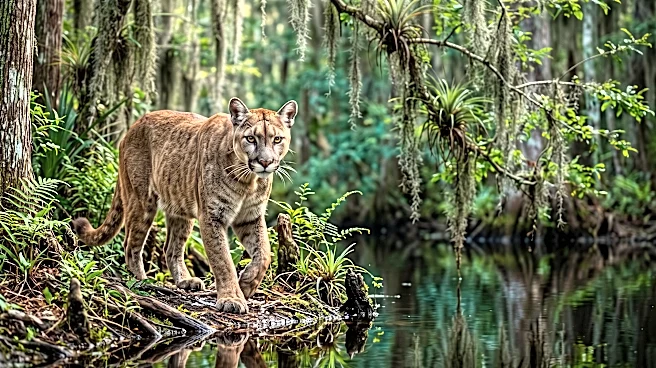
The Museum of Discovery & Science (MODS) has launched an augmented reality experience called 'Panther Prowl,' allowing visitors to interact with the Florida panther. This interactive show is accessible through the museum's mobile app, available on both
iOS and Android devices. The experience aims to connect users with the endangered Florida panther and promote conservation efforts. It is offered daily at 2 p.m. in the Keller Science Theater on the second floor of the museum and is included with general museum admission.
Why It's Important?
This initiative is important for several reasons. Firstly, it leverages augmented reality technology to enhance educational outreach, making learning about endangered species more engaging and immersive for museum visitors. This can significantly increase public awareness and foster a deeper connection to conservation issues. Secondly, by focusing on the Florida panther, the museum highlights a critical local environmental concern, emphasizing the importance of preserving Florida's ecosystem. The use of a mobile app also demonstrates how cultural and educational institutions are adapting to digital trends to reach broader audiences and provide interactive experiences beyond traditional exhibits.
What's Next?
The 'Panther Prowl' experience is an ongoing daily offering at the Museum of Discovery & Science. Its success could pave the way for similar augmented reality or interactive digital exhibits focusing on other endangered species or scientific topics. Other museums and educational institutions might observe MODS's approach to integrating technology for conservation education, potentially leading to wider adoption of AR in informal learning environments. Continued engagement with the mobile app will be crucial for the experience's long-term impact, and future updates could introduce new features or expand the scope of the AR content.
Beyond the Headlines
Beyond its immediate educational value, the 'Panther Prowl' experience touches upon the broader role of technology in fostering environmental stewardship. By allowing individuals to 'connect' with an endangered species through augmented reality, it creates a sense of proximity and personal responsibility that traditional exhibits might not achieve. This emotional engagement can be a powerful tool for inspiring action and support for conservation. Furthermore, the initiative highlights the potential of AR to bridge the gap between digital immersion and real-world issues, offering a model for how technology can be used to address complex environmental challenges and promote ecological literacy in an increasingly digital society.