





What's Happening?
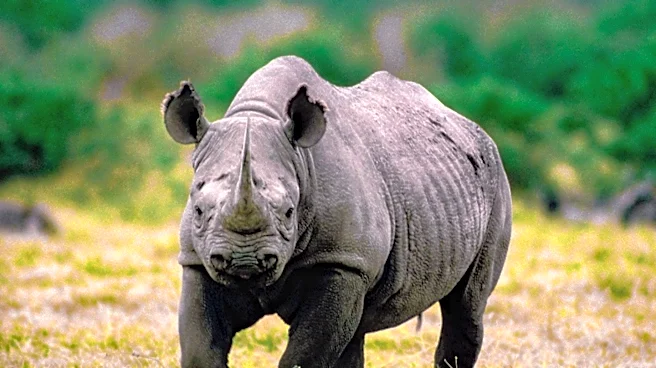
Zimbabwe's black rhinos, once critically endangered due to poaching, are experiencing a resurgence thanks to concerted conservation efforts. In the 1980s, the Zambezi Valley housed the largest contiguous population of black rhinos, but poaching decimated
their numbers. In response, Zimbabwe Parks and Wildlife Management Authority (ZimParks) initiated 'Operation Stronghold,' relocating surviving rhinos to private game ranches and protected zones. This strategy aimed to safeguard the species and eventually reintroduce them to their natural habitats. The operation involved tracking, darting, and transporting rhinos to safe areas, a challenging task given the animals' elusive nature and the rugged terrain.
Why It's Important?
The successful conservation of black rhinos in Zimbabwe highlights the effectiveness of targeted wildlife protection strategies. This resurgence not only helps preserve biodiversity but also supports eco-tourism, a vital economic sector for Zimbabwe. The efforts demonstrate the potential for reversing the decline of endangered species through coordinated action and international cooperation. The black rhino's recovery serves as a model for other conservation initiatives, emphasizing the importance of protecting natural habitats and combating illegal wildlife trade.
What's Next?
Continued vigilance and support are necessary to maintain the momentum of black rhino conservation. Strengthening anti-poaching measures and expanding protected areas will be crucial in ensuring the long-term survival of the species. Collaboration with international conservation organizations and securing funding for ongoing efforts will also play a vital role. Additionally, raising awareness about the importance of wildlife conservation can help garner public support and drive policy changes.
Beyond the Headlines
The black rhino's comeback underscores the broader challenges of wildlife conservation in Africa, where economic pressures and habitat loss threaten biodiversity. It highlights the need for sustainable development practices that balance human needs with environmental preservation. The story also reflects the resilience of nature and the potential for recovery when given the opportunity, offering hope for other endangered species facing similar threats.