





What's Happening?
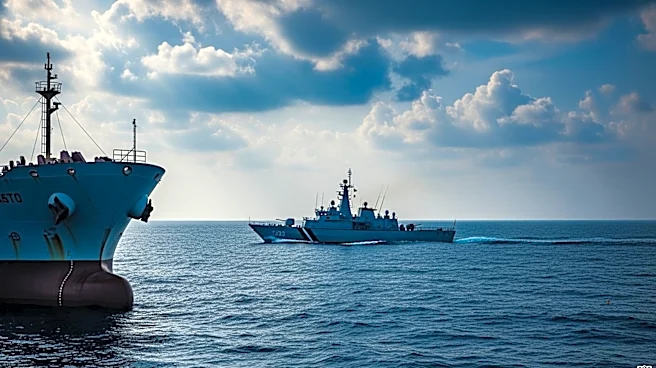
The U.S. military has seized the oil tanker MT Tifani in the Indian Ocean, which was reportedly carrying 1.9 million barrels of Iranian oil. This action underscores the ongoing conflict with Iran, extending it into the Indo-Pacific region. The MT Tifani had
been operating as part of Iran's shadow fleet, frequently turning off its automatic identification system to avoid detection while conducting ship-to-ship transfers in the Eastern Outer Port Limits (EOPL) off Malaysia. This area, known for its permissive regulatory environment, serves as a hub for Iran's oil trade, allowing the country to circumvent international sanctions and funnel cash back to its regime. The seizure of the MT Tifani is part of broader efforts by the U.S. to curb Iran's oil exports, which primarily go to China.
Why It's Important?
The seizure of the MT Tifani is significant as it highlights the U.S.'s ongoing efforts to enforce sanctions against Iran, particularly in the context of its oil exports. Iran's ability to continue exporting oil despite sanctions has been a critical factor in sustaining its economy and funding its regime. The use of shadow fleets and ship-to-ship transfers in areas like the EOPL allows Iran to maintain a steady flow of oil exports, primarily to China, which has not sanctioned Iranian crude. This situation poses challenges for international sanctions enforcement and highlights the complexities of global oil trade, where geopolitical tensions can have significant economic implications. The U.S.'s actions may also strain relations with countries like Malaysia, which is seen as a permissive environment for such activities.
What's Next?
Following the seizure, the U.S. is likely to continue its efforts to disrupt Iran's shadow fleet operations. This could involve increased monitoring and interdiction efforts in key maritime areas like the EOPL. The U.S. may also seek to engage with regional partners, including Malaysia, to tighten enforcement against illegal ship-to-ship transfers. Additionally, the seizure could prompt Iran to adjust its strategies, potentially seeking new routes or methods to evade detection. The international community, particularly countries involved in the oil trade, will be watching closely to see how these developments impact global oil markets and geopolitical dynamics.
Beyond the Headlines
The seizure of the MT Tifani sheds light on the broader issue of maritime security and the challenges of enforcing international sanctions. The use of shadow fleets and ship-to-ship transfers not only complicates enforcement efforts but also raises concerns about environmental risks and safety standards in unregulated waters. Furthermore, the situation underscores the strategic importance of maritime chokepoints like the Singapore Strait, where much of the world's oil trade passes. The ongoing conflict with Iran and the U.S.'s enforcement actions could have long-term implications for global oil supply chains and the stability of international shipping routes.