
What's Happening?
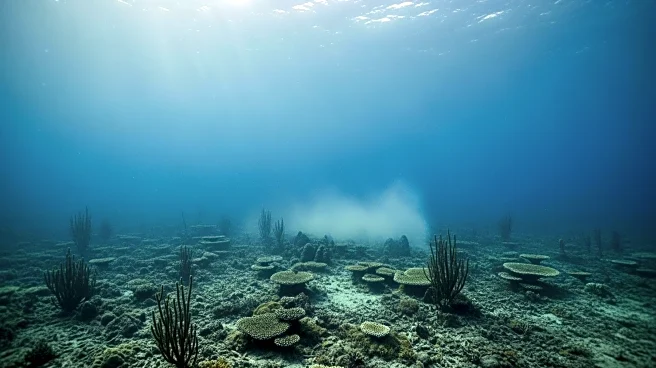
Marine ecologists have reported a concerning lack of biological activity on the seafloor in Barkley Canyon, attributed to ocean deoxygenation. Over a decade-long study using the NEPTUNE cabled observatory,
researchers observed that key decomposer species, such as Osedax worms and Xylophaga clams, were absent from sunken organic materials like whale bones and wood. This absence is linked to low-oxygen 'dead zones' caused by rising atmospheric temperatures, which reduce the ocean's oxygen retention capacity. The study highlights a potential collapse in the deep-sea nutrient cycle, as these organisms play a crucial role in recycling organic material and maintaining the marine ecosystem's balance.
Why It's Important?
The findings indicate a significant disruption in the deep-sea ecosystem, with potential implications for global marine biodiversity and the carbon cycle. The absence of decomposers could lead to a buildup of organic debris, affecting nutrient availability for other marine life and potentially disrupting food webs. This situation poses a threat to commercial fish populations and other marine resources that humans rely on. The study underscores the broader environmental impact of climate change, emphasizing the need for urgent action to address ocean deoxygenation and protect marine ecosystems from further degradation.
Beyond the Headlines
The research highlights the interconnectedness of climate change and marine health, illustrating how atmospheric changes can have profound effects on oceanic environments. The expansion of oxygen minimum zones (OMZs) could lead to widespread ecological shifts, affecting not only deep-sea species but also surface-dwelling organisms. This phenomenon may also influence global carbon storage, as the 'biological pump' that regulates carbon flow in the ocean is disrupted. The study calls for increased monitoring and research to better understand and mitigate the impacts of ocean deoxygenation on marine ecosystems.