


What's Happening?
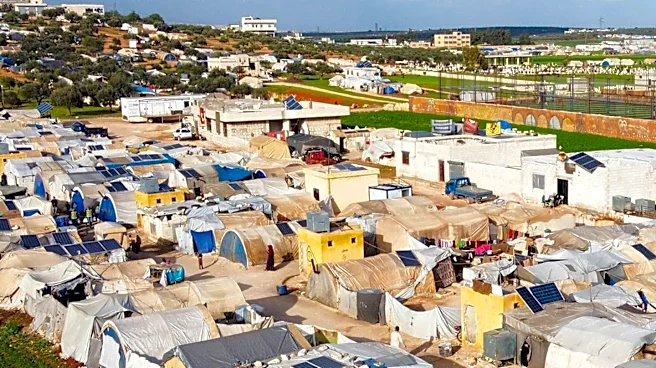
The United Nations Development Programme (UNDP), in collaboration with the Government of the Republic of Korea and the Government of Iraq, has initiated a $10 million program to assist internally displaced persons, returnees, and communities impacted
by displacement. This five-year initiative, funded by the Republic of Korea through the Korea International Cooperation Agency (KOICA) and implemented by UNDP, targets over 18,000 individuals across Anbar, Kirkuk, Ninewa, and Salah al-Din. The program focuses on rebuilding homes, restoring livelihoods, and strengthening community stability. Key areas of support include housing and essential community infrastructure, mental health and psychosocial services, and peacebuilding efforts. Special consideration is given to vulnerable groups such as women-headed households and persons with disabilities. The initiative also aims to improve access to essential facilities like education and health centers, and water supply systems.
Why It's Important?
This initiative is crucial for the long-term stability and recovery of regions in Iraq that have been severely affected by conflict and displacement. By focusing on housing, infrastructure, and livelihoods, the program addresses immediate humanitarian needs while also laying the groundwork for sustainable development. The emphasis on economic recovery, including climate-resilient agricultural assistance for 168 farmers and training and grants for 336 individuals to establish small and medium-sized businesses, is vital for fostering self-sufficiency and reducing reliance on aid. Furthermore, providing mental health and psychosocial support to 2,440 community members acknowledges the profound psychological impact of displacement and conflict, which is essential for holistic recovery. Strengthening Local Peace Committees and supporting social cohesion assessments are critical steps towards preventing future conflicts and promoting reconciliation within communities.
What's Next?
The initiative will continue its implementation over the next five years, with activities concentrated in specific areas such as Al-Qaim and Rummanah in Anbar, Hawija and Daquq in Kirkuk, Sinjar in Ninewa, and Baiji in Salah al-Din. The exact implementation areas will be further refined in coordination with Iraq’s Ministry of Migration and Displacement, KOICA, and UNDP during the project’s inception phase. The program is expected to help families rehabilitate safer homes and regain access to essential services. Ongoing efforts will include vocational training, provision of tool kits, and agricultural inputs to support sustainable income opportunities. The partnership represents a sustained commitment to helping displacement-affected families transition from vulnerability to recovery, stability, and sustainable livelihoods, aligning with Iraq’s broader goals for safe and sustainable returns.
Beyond the Headlines
The initiative's focus on climate-resilient agricultural assistance highlights a deeper understanding of the interconnectedness between environmental factors, displacement, and long-term stability. By integrating climate resilience into livelihood support, the program addresses not only the immediate needs of farmers but also prepares communities for future environmental challenges, which can be a significant driver of displacement. The comprehensive approach, combining physical reconstruction with mental health support and peacebuilding, recognizes that true recovery extends beyond material aid to encompass social and psychological well-being. This holistic strategy is essential for fostering genuine community resilience and preventing cycles of conflict and displacement. The emphasis on vulnerable groups also underscores an ethical commitment to equitable recovery, ensuring that those most impacted by crises are not left behind in the rebuilding process.