

What's Happening?
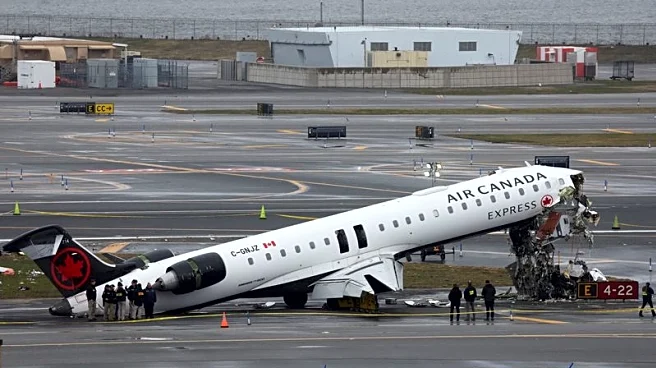
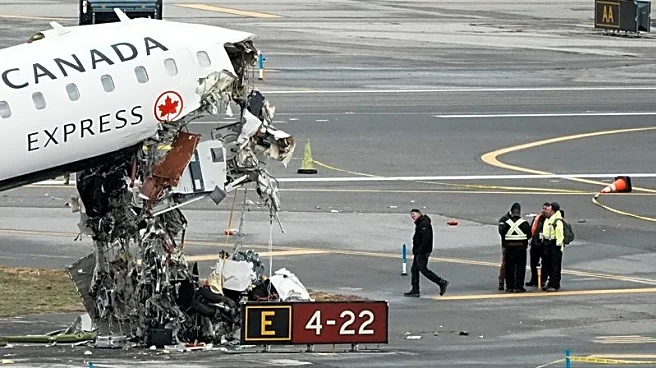
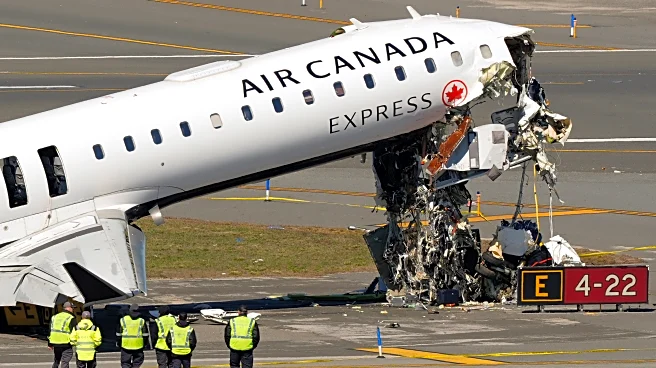
Safety concerns at New York's LaGuardia Airport were raised by pilots months before a fatal collision between an airplane and a fire truck on the runway. The crash resulted in the deaths of two pilots and injuries to 41 others. Pilots had previously reported
issues with air traffic control guidance and the pace of operations at the airport, likening it to conditions before a past mid-air collision in Washington, D.C. The incident has brought attention to the strain on U.S. airport operations, exacerbated by a shortage of air traffic controllers and aging equipment. The ongoing partial government shutdown has further impacted airport staffing and security, contributing to operational stress.
Why It's Important?
The LaGuardia crash underscores significant safety and operational challenges facing U.S. airports. The shortage of air traffic controllers and outdated infrastructure pose risks to aviation safety, potentially endangering passengers and crew. The incident highlights the broader implications of federal personnel cuts and the impact of government shutdowns on critical services. Addressing these issues is crucial for maintaining public confidence in air travel safety and ensuring the efficient functioning of airport operations. The situation calls for urgent policy and funding interventions to address staffing shortages and modernize airport infrastructure.
What's Next?
Federal investigators are conducting a thorough investigation into the LaGuardia crash, with findings expected to inform future safety protocols and operational improvements. The National Transportation Safety Board (NTSB) is analyzing flight data and cockpit recordings to determine the cause of the accident. In the meantime, the runway involved in the crash remains closed for debris clearance. The incident may prompt legislative and regulatory actions to address staffing and infrastructure challenges at U.S. airports, with potential implications for future federal budget allocations and aviation safety standards.