









What's Happening?
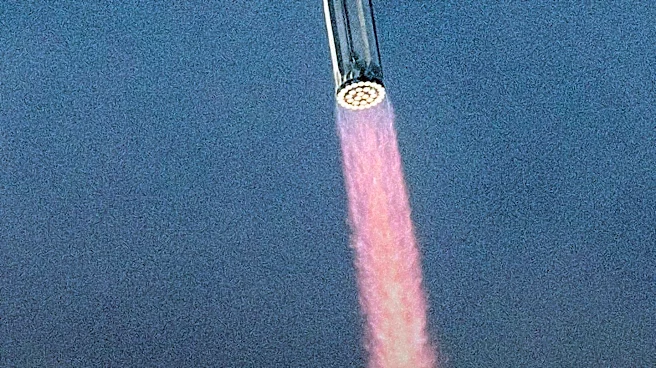
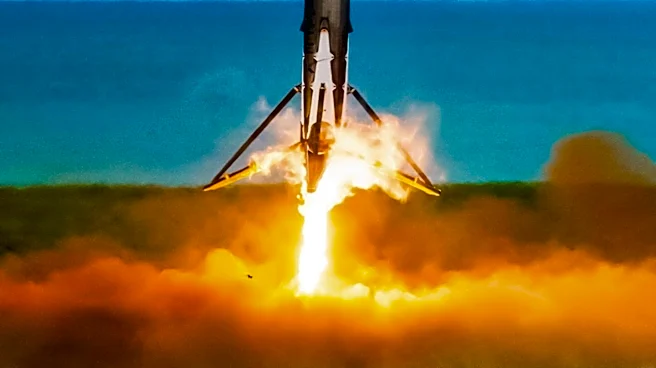
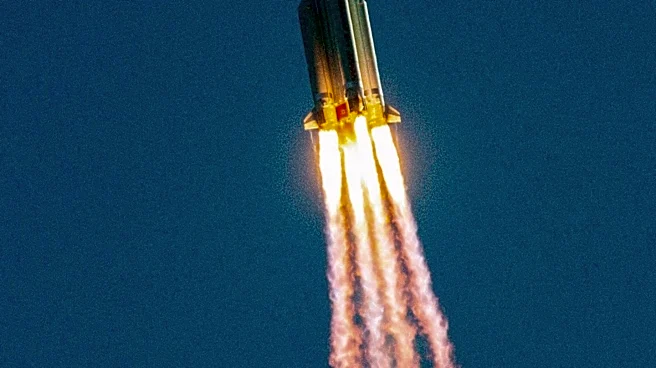
China has achieved a significant milestone in its space exploration efforts by successfully recovering the booster of an orbital-class rocket for the first time. This development marks a major advancement in China's pursuit of reusable launch systems,
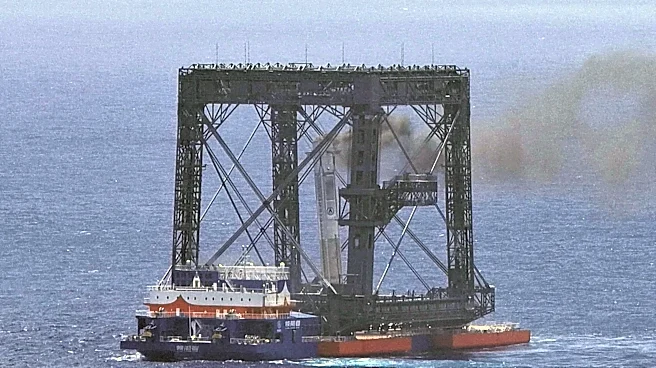
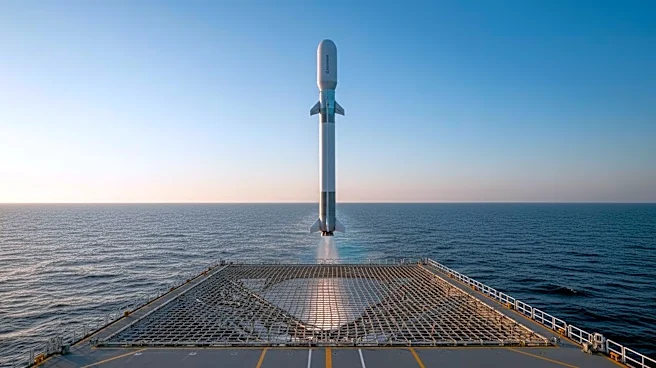
a technology that has been dominated by companies like SpaceX. The Long March 10B rocket, which lifted off from the Hainan commercial space launch site, placed a satellite into orbit before its booster was retrieved using a net-based system. This method differs from the autonomous landing systems used by SpaceX and Blue Origin, as it employs hooks to catch a net suspended above a sea platform. The approach is said to simplify the rocket's structure, reduce weight, and potentially increase payload capacity. This successful recovery is part of China's broader efforts to develop reusable rockets, which are crucial for reducing launch costs and supporting the expansion of commercial satellite networks.
Why It's Important?
The successful recovery of the Long March 10B booster represents a significant step forward for China's space ambitions, particularly in the realm of reusable rocket technology. This achievement could have substantial implications for the global space industry, as it positions China as a formidable competitor in the field of cost-effective space launches. By reducing launch costs, China can enhance its ability to deploy commercial satellites, which is vital for telecommunications, weather monitoring, and other applications. Additionally, the technology developed through this program could support China's planned crewed lunar missions before 2030, further solidifying its status as a major space power. The success of this mission has already had a positive impact on Chinese aerospace companies, with shares in firms like China Spacesat and China Satellite Communications experiencing significant gains.
What's Next?
Following the successful recovery of the Long March 10B booster, China is likely to continue refining its reusable rocket technology. The data collected from this mission will be instrumental in validating technologies for future lunar missions, as China aims to send crewed missions to the moon by 2030. The development of reusable rockets is expected to play a crucial role in these efforts, as it will help reduce costs and increase the frequency of launches. Additionally, the success of this mission may encourage further investment in China's aerospace sector, potentially leading to more innovations and advancements in space technology. As China continues to expand its capabilities, it may also seek to collaborate with other nations or compete more aggressively in the international space market.