






What's Happening?
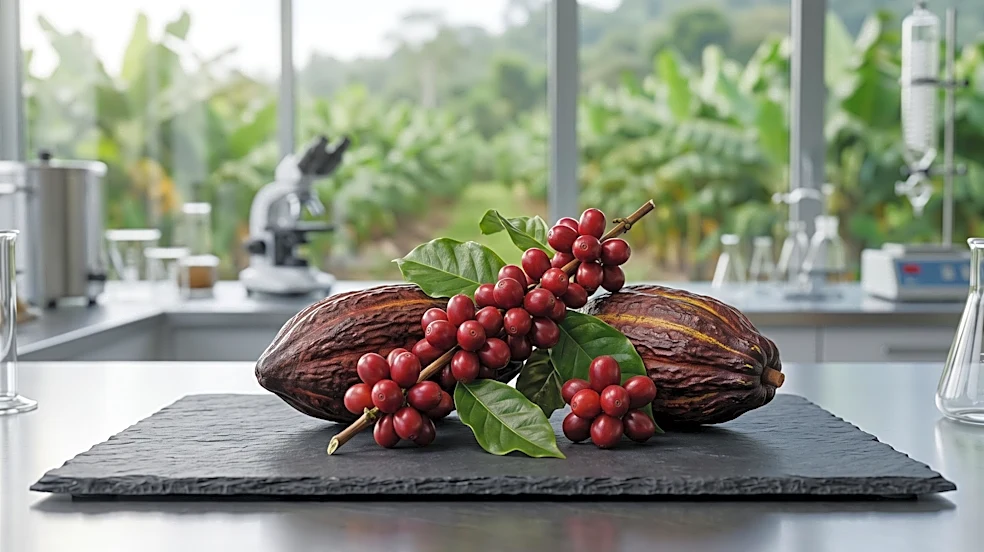
The University of Hawaiʻi at Mānoa will host and lead the new Feed the Future Innovation Lab for Coffee and Cacao (CCIL), a program funded by the U.S. Department of State (DOS). Clemson University in South Carolina will co-lead this initiative. The CCIL aims
to safeguard supply chains and boost local and global production of coffee and cacao. The program has received an initial obligation of $8 million for its first year, with the potential for up to five years of funding. According to Congressional Coffee Caucus Co-Chairs U.S. Rep. Jill Tokuda (Hawaiʻi) and U.S. Rep. William Timmons (South Carolina), the CCIL will connect innovative research with farms and supply chains to enhance productivity and profitability for small farmers, improve processing technologies, and ensure quality products for U.S. consumers. Hawaiʻi is considered a suitable 'living laboratory' for this program due to its commercial cultivation of both coffee and cacao.
Why It's Important?
This initiative is crucial for U.S. economic and national security interests, as over 99% of U.S. coffee and cacao are imported, making supply chains highly vulnerable to climate shocks, crop diseases, pests, and trade disruptions. Coffee contributes $343.2 billion annually to the U.S. economy and supports 2.2 million jobs, while chocolate generates $28.4 billion and supports 700,000 jobs. The CCIL's focus on developing heat-, disease-, and drought-resistant crop varieties, along with enhancing post-harvest processing and farm management techniques, will help secure reliable global supplies. This research will benefit thousands of smallholder farmers in Hawaiʻi and internationally across Latin America, Asia, and Africa, strengthening the U.S.'s leadership in agricultural research and production. Sen. Brian Schatz highlighted that this federal funding will provide local farmers with tools to combat threats like drought and invasive pests, boosting the production of Hawaiʻi's coffee and chocolate.
What's Next?
The CCIL is set to operate for up to five years, with ongoing research and development efforts focused on creating more resilient coffee and cacao supply chains. The program will continue to develop and test innovations in Hawaiʻi, with the goal of scaling these solutions to protect global supply chains. Collaboration between UH Mānoa, Clemson University, and a network of research institutions and industry partners, including Michigan State University, The Ohio State University, Penn State, and Mars, Incorporated, will drive future advancements. The program is expected to implement enhanced farm management techniques and processing technologies for smallholder farmers. The long-term goal is to ensure a stable and high-quality supply of coffee and cacao for U.S. consumers and to bolster the economic viability of farmers in the U.S. and abroad.
Beyond the Headlines
The establishment of the CCIL underscores a broader strategic effort to address vulnerabilities in global food supply chains, particularly for high-value agricultural commodities. Beyond the immediate economic benefits, this program highlights the increasing recognition of climate change's impact on agriculture and the necessity for proactive scientific intervention. The emphasis on smallholder farmers reflects a commitment to sustainable development and poverty reduction in producing regions, which can have geopolitical implications by fostering stability and economic independence. The collaboration between academic institutions, government agencies, and industry partners also exemplifies a multi-faceted approach to complex global challenges, potentially setting a precedent for future international agricultural development initiatives. This effort also reinforces the role of U.S. land-grant universities in addressing global food security and agricultural innovation.