








What's Happening?
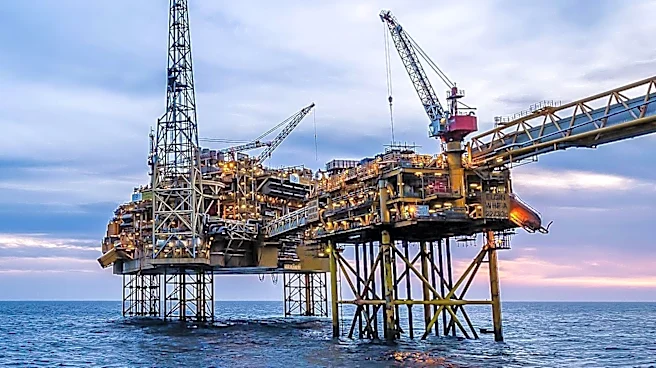
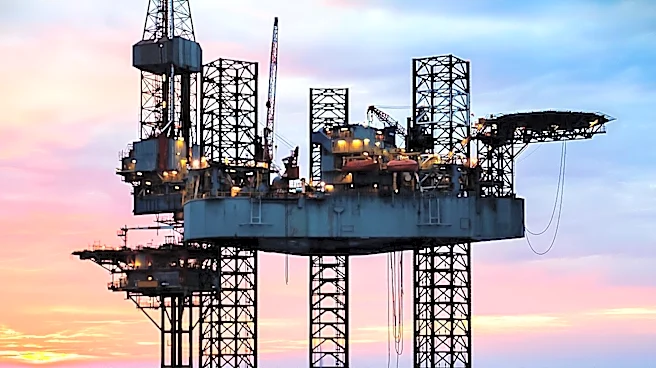
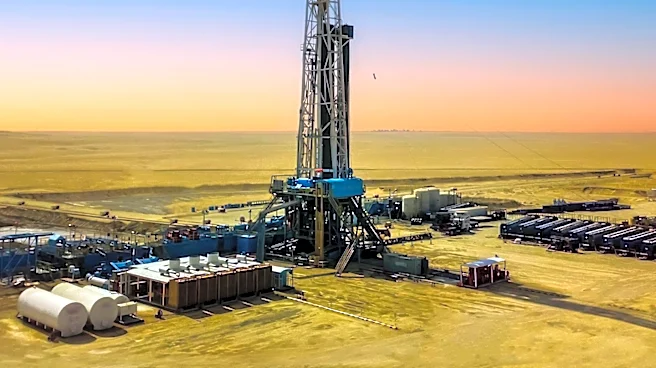
Libya possesses Africa’s largest proven crude oil reserves, totaling 48.4 billion barrels, which represents a significant portion of the continent's total of 125 billion barrels. Despite holding the largest reserves, Libya ranked only fourth in oil production
in 2024. This discrepancy is largely attributed to political disputes and blockades that have repeatedly disrupted output. Major foreign companies, including Italy’s Eni, France’s TotalEnergies, and Spain’s Repsol, operate in the country. In addition to its vast oil wealth, Libya also holds substantial natural gas reserves, estimated at 1.51 trillion cubic meters at the end of 2023. The country has historically been a destination for workers from various regions, including North Africa, sub-Saharan Africa, the Middle East, and Asia, and serves as a major transit route for migrants.
Why It's Important?
Libya's significant oil and gas reserves are crucial for global energy markets, but their inconsistent production due to internal political instability creates volatility. The disruptions impact not only Libya's economy, which heavily relies on hydrocarbon exports, but also global supply chains and energy prices. For foreign companies operating in Libya, political disputes and blockades pose considerable operational risks and investment challenges. The country's role as a transit route for migrants also adds a humanitarian dimension, linking its internal stability to broader regional and international migration patterns. The ongoing challenges in harnessing its energy potential underscore the complex interplay between natural resources, governance, and geopolitical stability in the region.
What's Next?
The future of Libya's energy sector largely depends on the resolution of its internal political disputes and the establishment of a stable governing authority. A more unified and effective administration could lead to increased and more consistent oil and gas production, attracting further foreign investment and potentially boosting the national economy. However, continued political fragmentation and blockades will likely perpetuate production disruptions, maintaining uncertainty in global energy markets. Efforts to stabilize the country could also impact migration flows, potentially altering transit routes and the humanitarian situation. The development of its natural gas reserves, much like its oil, will hinge on political stability and the ability to secure long-term investment and infrastructure development.
Beyond the Headlines
Beyond the immediate economic and political implications, Libya's energy wealth presents a paradox: immense natural resources coexist with significant societal challenges, including energy poverty for many Africans. While Libya holds vast reserves, the continent as a whole still has over 560 million people in sub-Saharan Africa lacking access to electricity. This highlights a broader issue of resource distribution and governance across Africa, where rich energy endowments do not always translate into widespread development or improved living standards for the populace. The situation in Libya underscores how political instability can prevent a nation from fully leveraging its natural assets for the benefit of its citizens and contribute to regional disparities in energy access and economic development.