






What's Happening?
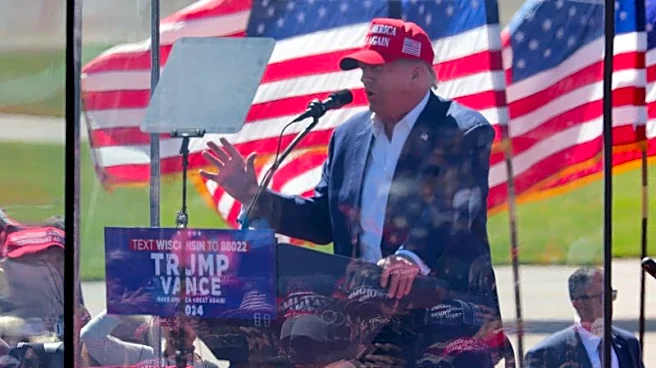
During a visit to Chippewa Falls, Wisconsin, President Trump promised farmers that input costs, including fertilizer and energy prices, would decrease. This visit marks his first in Wisconsin during his second term. Despite these assurances, the current
economic situation remains challenging for farmers, with rising input costs and restricted export opportunities due to geopolitical tensions. The closure of the Strait of Hormuz has further complicated export logistics, impacting farmers' revenues. President Trump also hinted at potential federal support for farmers, similar to previous aid programs.
Why It's Important?
President Trump's promises to reduce input costs are significant for the agricultural sector, which has been struggling with high expenses and market uncertainties. His visit underscores the administration's focus on supporting farmers, a key constituency. However, the broader economic and geopolitical context presents challenges that may limit the effectiveness of these promises. The potential for additional federal aid could provide temporary relief, but long-term solutions will require addressing underlying market and policy issues.
What's Next?
Farmers and industry stakeholders will be closely watching for any concrete policy measures or aid programs that may follow President Trump's visit. The administration's ability to deliver on promises of lower input costs will be critical in maintaining support from the agricultural community. Additionally, ongoing geopolitical developments and their impact on trade and export opportunities will continue to influence the sector's outlook.