






What's Happening?
Bruce Maxwell, director of computing programs in the Khoury College of Computer Sciences at Northeastern University Seattle, has developed a novel machine vision model capable of accurately depicting the true colors of objects in images, even when they
are obscured by shadows or captured in low lighting. This research aims to overcome a significant limitation of current computer vision systems, which often struggle to interpret objects accurately under varying light conditions, unlike the human eye. Maxwell's model was trained using approximately 25,000 logarithmic images collected by over 100 of his computer vision students from various Northeastern campuses. This dataset allowed the model to learn how light changes color between sun and shade, enabling it to automatically brighten shadowy objects to appear as if in uniform light without distortion.
Why It's Important?
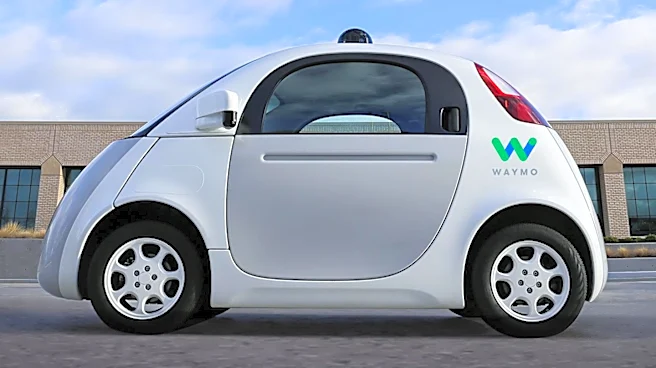
This advancement holds significant implications for industries heavily reliant on precise image analysis, such as autonomous vehicles and 3D video game art. For autonomous vehicles, current camera systems can misinterpret shadows as obstacles, leading to unnecessary braking and safety concerns. Maxwell's model could enhance the reliability of these systems by providing a clearer, shadow-free view of the road and surrounding objects, improving safety and efficiency. In 3D video game art, designers often need to capture numerous photos of real-world objects in perfect lighting to integrate them into games. This new model could streamline the process by allowing designers to simply record a short video, with the model automatically removing shadows and preparing a color-accurate 3D object. This could lead to more realistic game environments and more efficient content creation.
What's Next?
Maxwell hopes to integrate his machine vision model into autonomous vehicles for real-time operation, providing cars with a consistently clear picture of their surroundings by eliminating shadows from objects and people. Xian Li, a professor of electrical and computer engineering at Northeastern's Seattle campus, has expressed interest in testing Maxwell's model with street data collected by their research car. Beyond autonomous vehicles, the algorithm could also benefit photographers by offering more accurate and color-rich image correction than existing AI models and smartphone editing software. The ongoing development and testing of this model will focus on its real-world applicability and its potential to be scaled for widespread use across various technological platforms.
Beyond the Headlines
This research delves into the fundamental differences between human and machine perception of light and color. The human eye, acting as a logarithmic sensor, naturally adjusts to varying light intensities, preventing overexposure or underexposure. Cameras, which capture linear images, struggle with this dynamic range. Maxwell's approach of training AI with logarithmic images mimics human visual processing more closely, representing a significant step towards creating machine vision models as powerful as the human eye. This could lead to broader applications beyond current identified uses, potentially revolutionizing fields like medical imaging, surveillance, and even consumer photography by making visual data more consistently accurate and interpretable for both machines and humans. The ethical implications of highly accurate machine vision, particularly in surveillance, will also become a more prominent discussion point.