
What's Happening?
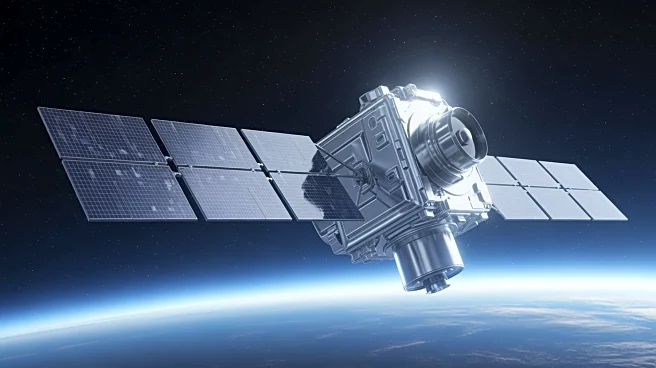
Thales Alenia Space, a joint venture between Thales and Leonardo, has successfully launched the third satellite of the COSMO-SkyMed Second Generation constellation from Vandenberg Space Force Base in California.
This satellite is part of a dual-use radar Earth observation system owned by the Italian Space Agency and the Italian Ministry of Defense. The launch was conducted aboard a SpaceX Falcon 9 rocket, and the satellite's signal was acquired by Telespazio's Fucino Space Center in Italy shortly after separation. The COSMO-SkyMed program aims to provide high-performance radar services for Earth observation, enhancing image quality and area coverage. The program is a significant achievement for the Italian national space system, reflecting technological and industrial excellence.
Why It's Important?
The successful launch of the third COSMO-SkyMed Second Generation satellite underscores Italy's growing role in the global space industry. The program enhances Italy's capabilities in Earth observation, providing critical data for environmental monitoring, security, and emergency management. The satellite's advanced radar technology offers improved image quality and coverage, supporting a wide range of applications from infrastructure monitoring to precision agriculture. This development strengthens Thales Alenia Space's position as a leader in space-based Earth observation infrastructure, contributing to international efforts in space exploration and environmental sustainability.
What's Next?
With the third satellite now in orbit, the COSMO-SkyMed Second Generation constellation is closer to its full deployment of four satellites. This will further enhance the system's performance and expand its range of applications. The data provided by the constellation will continue to support the European Copernicus program and other international initiatives. The ongoing development and deployment of the COSMO-SkyMed system will likely lead to increased collaboration between Italian and international space agencies, as well as private sector partners, to leverage the system's capabilities for global benefit.