






What's Happening?
China is set to launch the Shenzhou 23 mission to the Tiangong space station on May 24, 2026. The mission will send three astronauts, including Zhu Yangzhu, Zhang Zhiyuan, and Lai Ka-ying, to the space station for a six-month stay. Notably, Lai Ka-ying will become
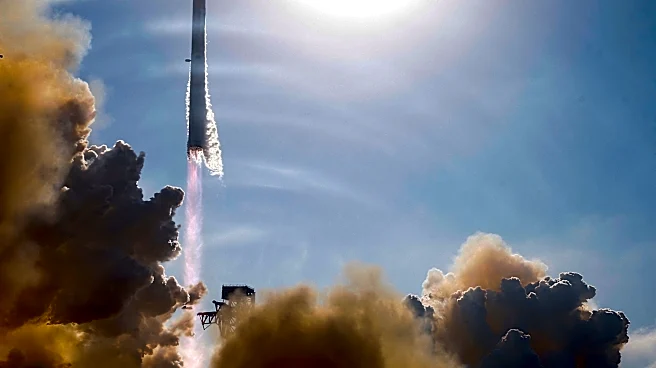
the first astronaut from Hong Kong to travel to space. The launch, scheduled for 11:08 a.m. EDT, will be conducted using a Long March 2F rocket from the Jiuquan Satellite Launch Center. This mission is significant as it may initiate China's first year-long human spaceflight. One of the astronauts from Shenzhou 23 is expected to remain in orbit for a year, as Shenzhou 24 will later bring a Pakistani astronaut for a short visit, taking the place of one of the Shenzhou 23 crew members. This mission follows the recent arrival of the Tianzhou 10 cargo spacecraft, which delivered supplies to Tiangong.
Why It's Important?
The Shenzhou 23 mission represents a significant milestone in China's space exploration efforts, highlighting the country's growing capabilities in human spaceflight. The potential year-long stay of an astronaut in orbit would mark a first for China, demonstrating its ability to sustain long-duration missions. This development could enhance China's position in the international space community and foster collaborations, as evidenced by the planned visit of a Pakistani astronaut. The mission also underscores China's commitment to expanding its space station operations, which could have implications for international partnerships and competition in space exploration.
What's Next?
Following the launch, the Shenzhou 23 crew will take over operations at the Tiangong space station from the Shenzhou 21 astronauts, who are scheduled to return to Earth on May 29. The mission will be closely watched to see which astronaut will undertake the year-long stay, a decision that has not yet been announced. The success of this mission could pave the way for future international collaborations and potentially more extended missions, as China continues to develop its space station capabilities.