




What's Happening?
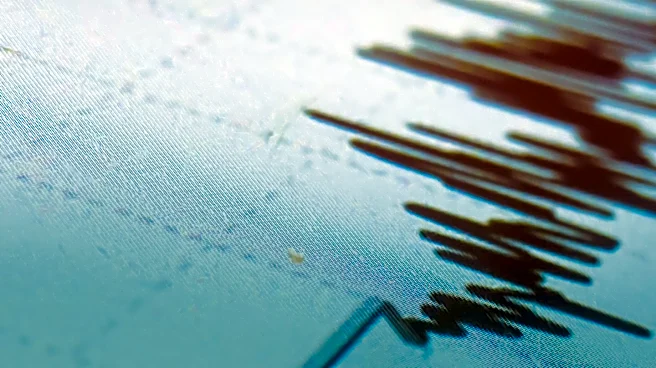
A 6.3-magnitude earthquake occurred 102 km northeast of Norsup, Vanuatu, at 8:00 p.m. local time on Thursday, according to the United States Geological Survey (USGS). The earthquake had a depth of 10 km. As of now, there are no immediate reports of casualties
or significant damage. Staff at the Chinese Embassy in Vanuatu confirmed that no tremors were felt in the capital, Port Vila, and no further information regarding affected areas is available. The Pacific Tsunami Warning Center did not issue a tsunami warning following the seismic event. Vanuatu is situated within the Pacific Ring of Fire, a region known for frequent seismic activity and volcanic eruptions due to the collision of continental plates.
Why It's Important?
The occurrence of a 6.3-magnitude earthquake in Vanuatu highlights the ongoing geological instability of the Pacific Ring of Fire. While this particular event has not resulted in immediate reports of casualties or significant damage, it serves as a reminder of the constant threat faced by countries in this region. The Ring of Fire, a horseshoe-shaped zone around the Pacific Ocean, is characterized by active plate boundaries that lead to frequent earthquakes and volcanic activity. For the U.S., understanding these seismic events is crucial for disaster preparedness and international aid efforts, especially given the presence of U.S. territories and interests in the broader Pacific region. Although Vanuatu's economy is small and has limited global linkages, major seismic events in the Ring of Fire can disrupt shipping lanes, impact global supply chains, and necessitate humanitarian responses, potentially involving U.S. resources and expertise.
What's Next?
Authorities in Vanuatu will continue to monitor the situation for any delayed reports of damage or injuries, particularly in more remote areas. The USGS and other international seismic monitoring agencies will analyze aftershocks and further geological data to assess any potential for future seismic activity. While no tsunami warning was issued for this specific event, residents in the Pacific Ring of Fire are always advised to remain vigilant for potential tsunamis following significant earthquakes. International aid organizations and governments, including the U.S., will likely remain on standby to offer assistance if the situation escalates or if damage is reported in the coming days. The long-term focus for countries in this region will continue to be on strengthening infrastructure and improving early warning systems to mitigate the impact of future seismic events.
Beyond the Headlines
The recurring seismic activity in the Pacific Ring of Fire, exemplified by the Vanuatu earthquake, underscores the profound geological forces shaping our planet. Beyond the immediate impact, these events contribute to a deeper scientific understanding of plate tectonics and earthquake prediction models. For the U.S., which has a significant scientific community dedicated to seismology, each event provides valuable data for research and development in earthquake engineering and disaster resilience. Furthermore, the vulnerability of island nations like Vanuatu to natural disasters raises ethical considerations regarding climate change and its potential to exacerbate the impacts of such events, particularly concerning sea-level rise and coastal erosion. The continuous threat also highlights the importance of international cooperation in disaster response and the sharing of scientific knowledge to protect populations in high-risk zones.