
What's Happening?
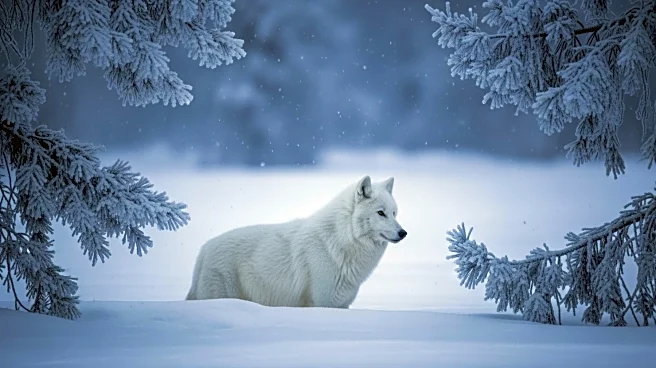
A viral TikTok video has captured a remarkable encounter between photographers and Arctic wolves near Eureka, a research base on Ellesmere Island. The footage, shared by Terry Noah, shows two photographers lying
on the ice as two Arctic wolves approach them. One wolf lies down next to a photographer, creating a striking moment of proximity. The video, which has garnered 24.9 million views, was filmed during a guided expedition led by Noah, who operates Ausuittuq Adventures in Grise Fiord, Canada. Noah, an Inuit resident, described the encounter as calm and non-threatening, highlighting the wolves' natural curiosity. The Arctic wolf's habitat is one of the most remote in the world, and such encounters with humans are rare.
Why It's Important?
This encounter highlights the unique and fragile ecosystem of the Arctic, where human presence is minimal. The video brings attention to the Arctic wolf, a species that, while currently listed as 'least concern' by the IUCN, faces potential threats from climate change. The remoteness of their habitat has protected them from many human-induced pressures, but environmental changes could alter their status. The viral nature of the video also underscores the growing interest in wildlife conservation and the importance of preserving these remote habitats. It serves as a reminder of the delicate balance between human exploration and wildlife preservation.
What's Next?
As climate change continues to impact Arctic regions, the habitat of the Arctic wolf may face significant changes. Conservationists and researchers will likely monitor these developments closely to assess any shifts in the wolves' status. The increased visibility from viral content like Noah's video could lead to greater public awareness and support for conservation efforts. Additionally, guided tours and expeditions in the Arctic may see increased interest, prompting discussions on sustainable tourism practices that protect wildlife and their habitats.
Beyond the Headlines
The encounter raises questions about the ethical implications of wildlife tourism and the responsibilities of guides and tourists in such remote areas. It also highlights the cultural significance of the Arctic for indigenous communities like the Inuit, who have lived in harmony with the land and its wildlife for generations. As interest in Arctic exploration grows, balancing economic opportunities with cultural preservation and environmental protection will be crucial.