




What's Happening?
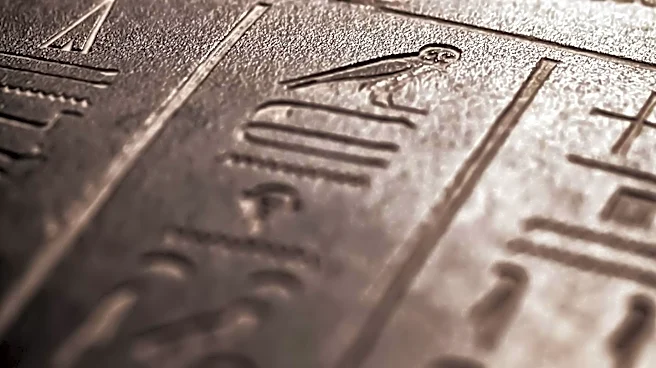
A video from the British Museum, released on October 28, 2026, delves into the inscription of the Rosetta Stone and its significance. The video is part of a broader series exploring ancient history, including the Amarna letters. These letters, discovered
in Egypt in the late 19th century, offer insights into diplomatic communications between Egyptian pharaohs and other rulers in the 14th century BCE. Notably, these letters were primarily written in cuneiform, a writing system typically associated with ancient Mesopotamia, rather than Egyptian hieroglyphs. Assyriologist Irving Finkel details the origins and discovery of these letters, highlighting their content, which includes disputes, requests for military support, and demands for gold.
Why It's Important?
This exploration of ancient diplomatic practices and writing systems provides valuable historical context for understanding the evolution of international relations and communication. The Rosetta Stone, as a key to deciphering hieroglyphs, revolutionized the study of ancient Egypt, making previously unreadable texts accessible. The Amarna letters, written in cuneiform, demonstrate the widespread use and influence of this writing system across different cultures in the ancient world. Understanding these historical interactions can offer perspectives on how little fundamental aspects of diplomacy, such as negotiation, alliances, and resource requests, have changed over millennia. This historical insight is crucial for academics, historians, and anyone interested in the roots of modern geopolitical dynamics.
What's Next?
The British Museum continues to produce and share educational content related to ancient history and archaeology, with this video being one example. Future content may further explore other ancient artifacts, writing systems, or diplomatic exchanges, potentially leveraging new research or technological advancements in archaeological analysis. The ongoing study of such historical documents will likely lead to new interpretations and a deeper understanding of ancient civilizations. The accessibility of these videos online allows for a broader public engagement with historical research, potentially inspiring further interest in ancient studies and the preservation of cultural heritage.
Beyond the Headlines
The video's focus on the Amarna letters and their cuneiform script highlights the interconnectedness of ancient civilizations and the shared intellectual heritage across different regions. The use of cuneiform in Egyptian diplomatic correspondence underscores the role of lingua francas in ancient diplomacy, much like English serves today. This historical parallel suggests that the need for common communication tools to facilitate international relations is a persistent human endeavor. Furthermore, the content of the Amarna letters—petty disputes and requests for resources—reveals the enduring human elements of power, negotiation, and conflict that have shaped societies from antiquity to the present day. This deep historical perspective can inform contemporary discussions on diplomacy and international relations.