






What's Happening?
Transportation departments in California and New Jersey are advancing their management of the heavy-duty trucking industry by implementing enhanced data collection systems. The California Department of Transportation (Caltrans) has signed a $2.4 million
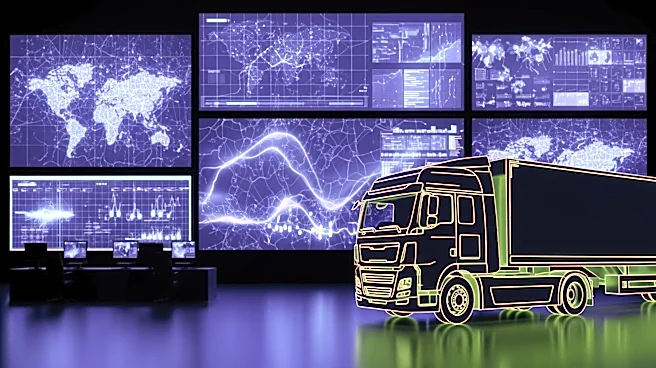
agreement with Quarterhill Inc. to deploy weigh-in-motion (WIM) data collection programs across three new projects in Southern California. These projects aim to improve freight logistics by providing detailed vehicle weight and traffic data. Similarly, the New Jersey Department of Transportation (NJDOT) has partnered with Quarterhill to maintain and oversee New Jersey's network of WIM stations and Traffic Volume System sites. These initiatives are part of a broader effort to leverage technology, including AI and machine learning, to improve transportation network efficiency and infrastructure planning.
Why It's Important?
The implementation of advanced data collection systems in California and New Jersey is significant for several reasons. By utilizing technology to gather and analyze transportation data, these states can enhance their infrastructure planning and enforcement efficiency. This approach not only helps in extending the lifespan of roadways but also improves safety outcomes by targeting inspections more effectively. The use of AI and machine learning in these systems represents a shift towards more data-driven decision-making in transportation management, which could serve as a model for other states. The projects also highlight the growing importance of technology in addressing the challenges of managing freight logistics in densely trafficked areas.
What's Next?
The projects in California are expected to come online this year and into 2027, indicating a phased implementation approach. As these systems become operational, they are likely to provide valuable insights that could influence future transportation policies and infrastructure investments. The success of these initiatives may prompt other states to adopt similar technologies, potentially leading to a nationwide shift in how transportation networks are managed. Additionally, the integration of AI and machine learning in these systems could pave the way for further innovations in transportation technology.