



What's Happening?
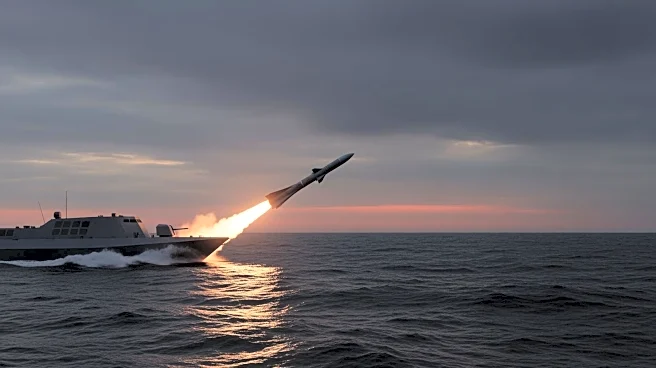
North Korea has conducted a test of long-range strategic cruise missiles, as announced by the state-run Korean Central News Agency (KCNA). The test, overseen by Kim Jong Un, is part of North Korea's efforts to enhance its nuclear deterrent capabilities
amid perceived security threats. The missiles followed a predetermined path over the Yellow Sea before hitting their targets. This development is part of a broader pattern of missile tests by North Korea, which includes advanced weapons such as hypersonic reentry vehicles and intercontinental ballistic missiles. These actions have been a source of tension with South Korea and the United States, as they are seen as a challenge to regional stability.
Why It's Important?
The missile tests underscore North Korea's ongoing commitment to expanding its military capabilities, which poses a significant challenge to regional security. The tests are often interpreted as signals of dissatisfaction or as tests of the resolve of the United States and its allies. The continued development of North Korea's missile program could potentially threaten U.S. and allied forces in the region. Additionally, there are concerns about possible technological assistance from Russia, which could further enhance North Korea's capabilities. These developments complicate diplomatic efforts aimed at denuclearization and maintaining peace on the Korean Peninsula.
What's Next?
North Korea is preparing for its Ninth People's Congress, where new economic and military plans are expected to be approved. This could include further advancements in its missile and nuclear programs. The international community, particularly the United States and South Korea, will likely continue to monitor these developments closely. Diplomatic efforts may be intensified to address the growing security concerns, but the path forward remains uncertain given North Korea's strategic priorities.