



What's Happening?
The current political landscape in the U.S. is witnessing a rise in anti-Muslim rhetoric targeting Muslim American candidates, with public figures making statements that link them to terrorism and national security threats. This trend is exemplified by
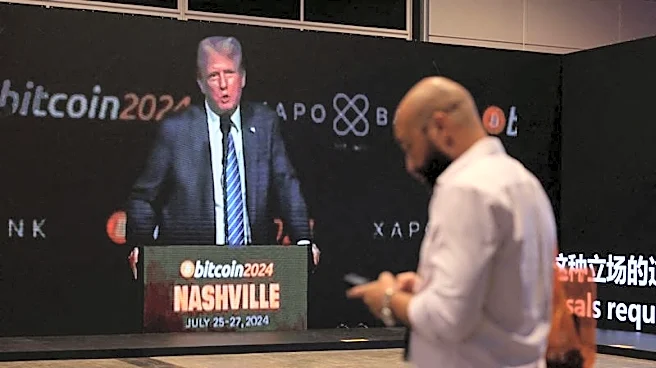
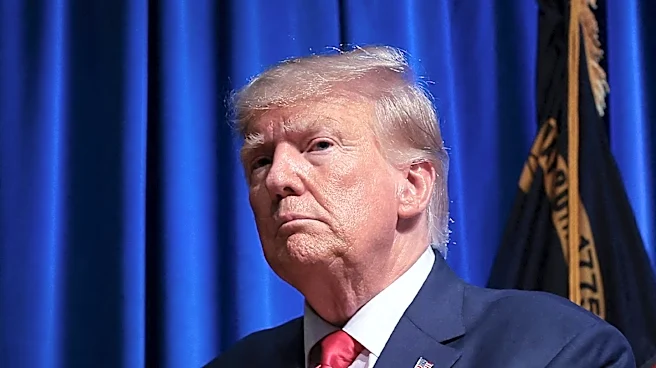
remarks from Senator Tommy Tuberville, Representative Nancy Mace, and President Trump, who have all made disparaging comments about Muslim individuals running for office. This rhetoric is framed within a broader discussion of racial capitalism, a system where the unequal valuation of human life and labor along racial lines dictates who holds power and resources. Critics argue that reducing racism to individual microaggressions obscures its systemic role in determining civic participation and leadership for people of color. The historical context of white supremacism in American politics, from Reconstruction-era efforts to suppress Black voters to mid-20th-century segregationist tactics, is cited as a precedent for these contemporary attacks. The article highlights that these anti-Muslim sentiments are not merely isolated incidents but rather reflect a continuous effort to hoard power for a specific group within a racially exploitative system.
Why It's Important?
This resurgence of anti-Muslim rhetoric in U.S. elections is significant because it undermines the principles of equitable representation and democratic participation. By targeting candidates based on their religious and ethnic identities, it creates a hostile environment for minority groups seeking to engage in the political process. The framing of these attacks within the concept of racial capitalism suggests a deeper, systemic issue where power is intentionally concentrated and maintained through exclusionary practices. This not only impacts the individuals targeted but also discourages broader civic engagement from marginalized communities. The historical parallels drawn in the article emphasize that such tactics are not new but are recurring manifestations of a struggle for power rooted in racial and ethnic divisions. The implication is that these attacks are designed to limit minority influence and reinforce existing power structures, rather than being genuine concerns about national security or political ideology. This dynamic can lead to a less inclusive and representative political system, potentially alienating a significant portion of the electorate and hindering progress towards a more equitable society.
What's Next?
The ongoing battle against anti-Muslim rhetoric in U.S. politics will likely involve continued efforts from civil rights organizations and advocates to challenge discriminatory statements and policies. Muslim American candidates and their supporters are expected to persist in their campaigns, pushing for greater representation despite the challenges. The article suggests that a key strategy for excluded communities is to build their own power rather than seeking acceptance within a system designed to divide. This could involve increased voter registration drives, community organizing, and legal challenges against discriminatory practices. The long-term goal is to demand a more equitable system that denounces dehumanization and exploitation, moving beyond mere entry into a racially exploitative structure. The discussion around racial capitalism indicates that addressing these issues will require systemic changes rather than just individual responses to prejudice. Future developments may also include increased scrutiny of public figures who engage in such rhetoric and a broader societal conversation about the historical and ongoing impact of white supremacism on American politics.
Beyond the Headlines
The deeper implication of the anti-Muslim rhetoric and the concept of racial capitalism is the challenge to the foundational ideals of American democracy. The historical context provided, referencing figures like Bob Moses and the Mississippi Freedom Democratic Party, underscores a persistent tension between the aspiration for a moral and equitable political system and the reality of power struggles rooted in racial and economic hierarchies. The quote from Bob Moses, 'We were trying to bring morality into politics, not politics into our morality,' highlights a fundamental ethical dimension often overlooked in contemporary political discourse. The article suggests that focusing solely on individual acts of prejudice (microaggressions) distracts from the systemic nature of racial capitalism, which dictates who has the right to live, speak, and share power. This broader perspective reveals that the current anti-Muslim sentiment is not just about religious intolerance but is a tactic within a larger system designed to maintain power for a dominant group. The long-term shift triggered by these developments could be a re-evaluation of how American society defines and pursues true equality and justice, moving beyond superficial integration to demand fundamental structural changes.