




What's Happening?
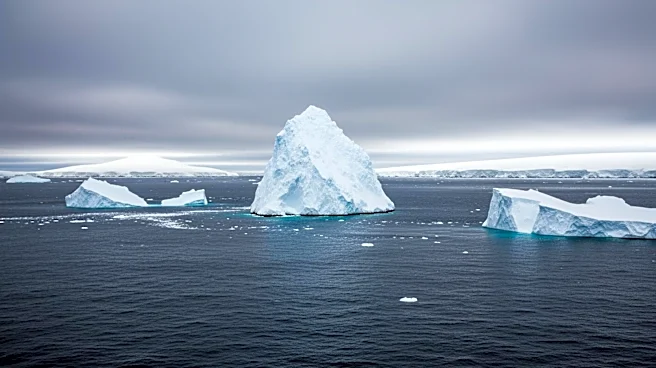
A team of international explorers aboard the icebreaker Polarstern has discovered an uncharted island off the coast of Antarctica in a region known as the 'danger zone.' Initially mistaken for a dirty iceberg, the island was found during an expedition
in the northwestern Weddell Sea. The island, roughly the size of the Great Pyramid of Giza, measures 165 feet wide and 426 feet long, and rises 50 feet above the waves. The discovery was made after the crew took refuge from a storm on the sheltered side of Joinville Island. The island's presence was unexpected, as nautical charts marked the area as having unexplored dangers but did not indicate a landmass. The island's mapped position is also a mile off from its actual location, adding to the mystery.
Why It's Important?
The discovery of the uncharted island in Antarctica's danger zone is significant for several reasons. It highlights the potential for undiscovered landmasses in remote regions, which could have implications for navigation and mapping. The island's presence in a previously marked danger zone suggests that existing nautical charts may need revision, impacting maritime safety and exploration strategies. Additionally, the discovery could lead to new scientific research opportunities, as the island's geological and ecological characteristics are yet to be studied. This event underscores the importance of continued exploration and monitoring of remote areas, which can yield unexpected findings that challenge current understanding.
What's Next?
The next steps involve officially naming the newly discovered island and updating nautical charts to reflect its presence accurately. Scientists and cartographers will likely conduct further studies to understand the island's geological composition and ecological significance. The discovery may prompt additional expeditions to explore other potential uncharted areas in Antarctica. Stakeholders such as maritime organizations and scientific research institutions may collaborate to ensure safe navigation and expand knowledge of the region. The island's discovery could also lead to discussions on international cooperation in Antarctic exploration and conservation efforts.
Beyond the Headlines
The discovery of the uncharted island raises questions about the accuracy of existing maps and the potential for other undiscovered landmasses in remote regions. It highlights the challenges of cartography in areas with harsh environmental conditions and limited accessibility. The event may spark interest in the historical and cultural aspects of exploration, drawing parallels to past expeditions that uncovered new territories. Additionally, the island's presence in a danger zone could lead to discussions on the environmental impact of human activities in Antarctica and the need for sustainable exploration practices.