


What's Happening?
President Donald Trump announced that his newly established Board of Peace has pledged $5 billion towards the reconstruction of Gaza, a region severely affected by prolonged conflict. The announcement was made in West Palm Beach, Florida, where Trump highlighted
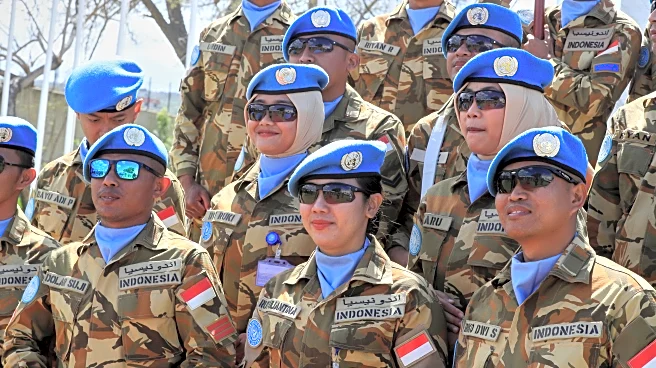
the commitment of the Board to not only provide financial aid but also to deploy thousands of personnel for international stabilization and policing efforts in the territory. The formal announcement of these pledges is scheduled to occur during the Board's first meeting in Washington. While specific member nations contributing to the fund were not disclosed, Indonesia has committed up to 8,000 troops for potential deployment by June. The reconstruction of Gaza is estimated to cost $70 billion, according to the United Nations, World Bank, and European Union. The initiative is part of a broader ceasefire agreement aimed at ending the conflict between Israel and Hamas, which includes the establishment of an armed international stabilization force.
Why It's Important?
The pledge by the Board of Peace represents a significant international effort to address the humanitarian crisis in Gaza, which has been devastated by years of conflict. The financial and personnel commitments could play a crucial role in stabilizing the region and facilitating reconstruction efforts. This initiative also reflects President Trump's broader strategy to influence global peace efforts outside traditional international bodies like the United Nations. The involvement of countries like Indonesia indicates a willingness among some nations to support U.S.-led peace initiatives. However, the success of this effort will depend on the participation and cooperation of other international stakeholders, as well as the ability to effectively disarm militant groups like Hamas, which remains a contentious issue.
What's Next?
The upcoming meeting of the Board of Peace in Washington will be a critical step in formalizing the pledges and outlining the operational framework for the reconstruction and stabilization efforts in Gaza. The participation of international stakeholders and their commitments will be closely watched. Additionally, the response from Israel and other regional players will be pivotal in determining the feasibility and success of the proposed stabilization force. The broader implications of this initiative on U.S. foreign policy and its relations with traditional allies, who have been skeptical of bypassing the United Nations, will also be significant.