


What's Happening?
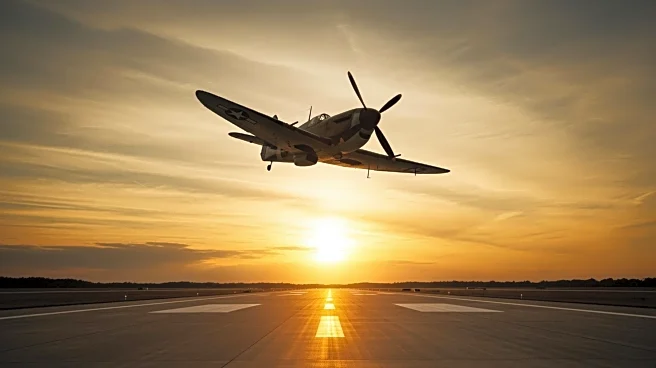
Edward 'Butch' O'Hare, a U.S. Navy pilot, became a celebrated World War II hero on February 20, 1942, when he singlehandedly downed several Japanese bombers attacking his aircraft carrier. This act of bravery earned him the distinction of being the first
naval aviator to receive the Congressional Medal of Honor. President Franklin D. Roosevelt praised O'Hare's actions as 'the most daring single action in aviation history.' Following his heroic deeds, O'Hare was brought back to the United States for a celebrity tour. Tragically, O'Hare died at the age of 29 on November 26, 1943, during the Navy's first nighttime fighter attack from an aircraft carrier. His plane and body were never recovered. Despite his limited ties to Chicago, the city's Orchard Place Airport was renamed O'Hare Field in 1949 to honor his legacy, a move championed by Tribune publisher Robert R. McCormick and Alderman John Hoellen.
Why It's Important?
The renaming of Chicago's airport to O'Hare International Airport serves as a lasting tribute to Edward 'Butch' O'Hare's heroism and the impact of his actions during World War II. This decision reflects the city's recognition of national heroes and their contributions to American history. The airport, now one of the busiest in the world, stands as a symbol of O'Hare's bravery and the broader sacrifices made by military personnel during the war. The story of O'Hare's valor continues to inspire and remind the public of the courage and dedication of those who serve in the armed forces. Additionally, the airport's name serves as a historical touchstone, connecting travelers to a significant moment in U.S. military history.
What's Next?
The legacy of Edward 'Butch' O'Hare is likely to continue influencing how Chicago and the nation honor military heroes. As the airport remains a critical hub for international travel, it will continue to serve as a reminder of O'Hare's bravery. Future commemorations or educational initiatives may further highlight his contributions and the broader context of World War II aviation history. The airport's role in connecting people globally also underscores the importance of remembering and honoring those who have made significant sacrifices for their country.