







What's Happening?
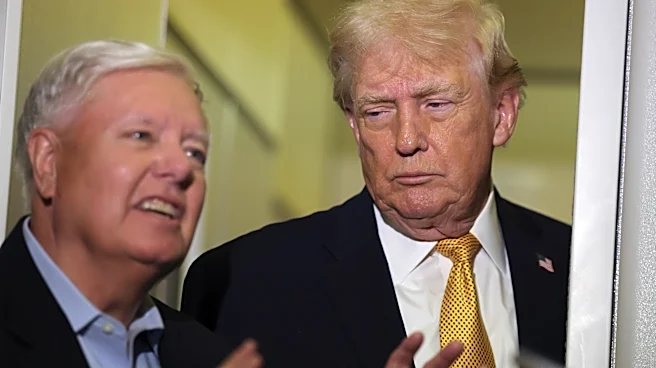
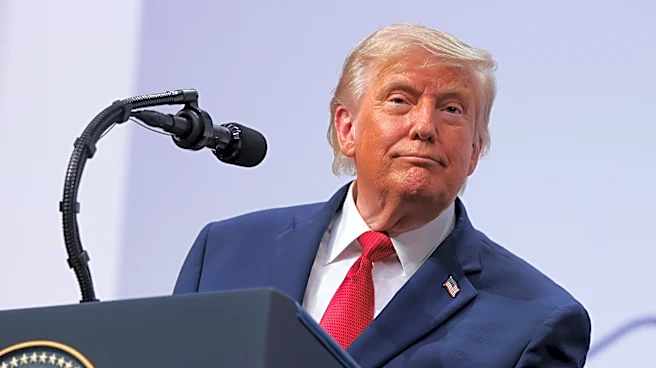
President Trump has allowed a bipartisan housing bill to become law without his signature, using the opportunity to protest the lack of progress on the SAVE America Act, a voter ID bill he supports. The housing bill, which aims to reduce regulations on home
builders and limit corporate purchases of homes, passed Congress with strong bipartisan support. Despite this, Trump has criticized the bill as 'unimportant' compared to his voter ID initiative. His decision not to sign the bill has drawn criticism from Democrats, who argue that it reflects misplaced priorities, focusing on personal power rather than addressing housing affordability.
Why It's Important?
The enactment of the housing bill without Trump's signature highlights a significant policy achievement that could help address the U.S. housing crisis by increasing the supply of affordable homes. However, Trump's focus on the SAVE America Act and his refusal to sign the housing bill underscore ongoing political divisions and priorities within the Republican Party. This situation may impact the party's ability to present a unified front on key voter issues, such as housing affordability, especially as midterm elections approach. The political maneuvering around these bills reflects broader debates about federal versus state control in election administration and housing policy.
What's Next?
As the housing bill becomes law, its implementation will be closely watched by stakeholders in the housing market. The focus will be on how effectively the bill's provisions are enacted and their impact on housing affordability. Meanwhile, Trump's continued advocacy for the SAVE America Act may influence Republican legislative priorities and strategies, potentially affecting voter perceptions and party dynamics in the upcoming elections. The interplay between these legislative efforts and political strategies will be critical in shaping the policy landscape and electoral outcomes.