







What's Happening?
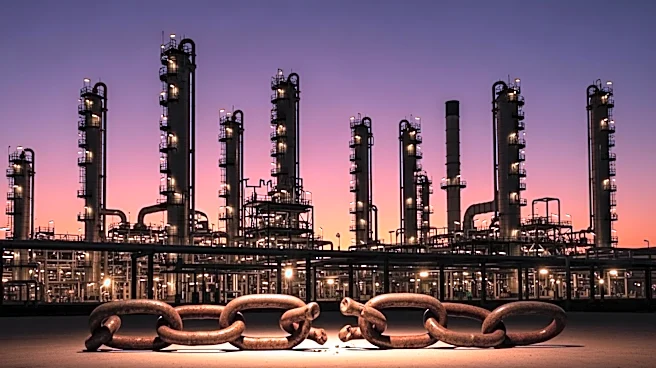
The U.S. Treasury Department has announced extensive sanctions targeting 40 shipping firms and vessels, as well as a Chinese oil refinery, in an effort to curb maritime trade with Iran. This move is part of a broader strategy to apply economic pressure
on Iran, coinciding with the ongoing conflict dubbed Operation Epic Fury. The sanctions primarily affect Chinese-linked operations, which have been instrumental in transporting Iranian crude oil. The recent seizure of the vessel Touska, which was intercepted while carrying materials potentially usable as rocket fuel, has further strained U.S.-China relations. China, a major buyer of Iranian oil, has criticized these actions, labeling them as illegal and distancing itself from the sanctioned entities.
Why It's Important?
These sanctions represent a significant escalation in U.S. efforts to disrupt Iran's oil trade, which is crucial for funding its military activities and nuclear ambitions. By targeting China's involvement, the U.S. is addressing a key component of Iran's shadow fleet, which operates through a complex network of tankers and intermediaries. This move could impact global oil markets, particularly affecting China's 'teapot' refineries that rely on discounted Iranian crude. The sanctions also come at a delicate time in U.S.-China relations, with President Trump scheduled to meet Chinese President Xi Jinping soon. The outcome of these diplomatic engagements could influence future economic and geopolitical dynamics.
What's Next?
The U.S. is likely to continue its crackdown on Iran's shadow oil trade, potentially leading to further sanctions and seizures. China's response to these actions will be critical, as it balances its economic interests with diplomatic relations. The upcoming summit between President Trump and President Xi Jinping may address these tensions, with potential implications for broader U.S.-China trade and diplomatic relations. Additionally, the effectiveness of these sanctions in curbing Iran's oil exports will be closely monitored, as it could influence future U.S. foreign policy strategies.