






What's Happening?
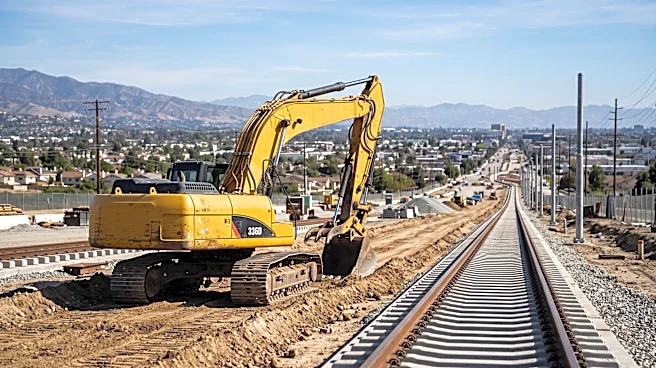
A joint venture between Skanska and Stacy Witbeck has officially broken ground on the major construction phase of the East San Fernando Valley Light Rail Transit Project in Los Angeles, California. The groundbreaking ceremony, held at the Van Nuys Civic
Center, marked a significant milestone for the project, which aims to connect San Fernando Valley residents to the broader Metro network. The $2.43 billion contract encompasses the construction of a 6.7-mile, street-level light rail line along Van Nuys Boulevard, a 26-acre rail and maintenance facility, 11 new stations with shade structures, and necessary utility relocations and improvements. The project is anticipated to be completed in early 2032. Both Skanska and Stacy Witbeck have a history of collaborating on complex infrastructure and rail projects in Southern California, including the Sixth Street Viaduct Replacement Project.
Why It's Important?
This project is crucial for improving north-south mobility in the East San Fernando Valley, offering residents enhanced access to work, education, and healthcare facilities, while also integrating the area into the wider Los Angeles transit system. The new light rail is projected to run trains every seven to ten minutes during peak hours, providing a more reliable alternative to driving and potentially reducing traffic congestion and vehicle emissions. Economically, the project is expected to stimulate local business activity. Beyond its immediate impact, the initiative highlights a significant investment in public infrastructure within the U.S., aiming to modernize urban transportation and promote sustainable development. The collaboration between Skanska and Stacy Witbeck, both experienced in large-scale infrastructure, underscores the complexity and strategic importance of such ventures for urban planning and regional connectivity. This development is a key step in addressing the transportation challenges of a major U.S. metropolitan area.
What's Next?
Following the groundbreaking, the Skanska-Stacy Witbeck joint venture will proceed with the major construction phase of the East San Fernando Valley Light Rail Transit Project, with completion scheduled for early 2032. Over the next several years, construction will involve laying 6.7 miles of street-level light rail, building a 26-acre rail and maintenance facility, and constructing 11 new stations. Utility relocations and improvements will also be a significant part of the ongoing work. As part of their community engagement, the joint venture will continue to conduct the San Fernando Transit Constructors Careers Academy, offering professional development courses for individuals interested in construction careers within the project's vicinity. This initiative aims to foster local workforce development alongside the infrastructure build-out. The project's progress will be closely monitored by the Los Angeles County Metropolitan Transportation Authority (Metro), civic leaders, and community members, as it moves towards its goal of enhancing regional mobility and connectivity.
Beyond the Headlines
The East San Fernando Valley Light Rail Transit Project represents more than just a transportation upgrade; it signifies a long-term commitment to urban revitalization and environmental sustainability in one of the U.S.'s largest metropolitan areas. By providing a reliable alternative to driving, the project aims to reduce the region's carbon footprint and improve air quality, aligning with broader national efforts to combat climate change. The integration of new stations with shade structures also reflects a consideration for public comfort and climate resilience in urban design. Furthermore, the project's community engagement through the San Fernando Transit Constructors Careers Academy highlights a social dimension, aiming to create local job opportunities and foster skill development within the community. This approach suggests a holistic view of infrastructure development that extends beyond mere construction to include economic empowerment and environmental stewardship. The success of such large-scale public transit projects can serve as a model for other U.S. cities grappling with similar challenges of congestion, pollution, and the need for equitable access to essential services.