







What's Happening?
The United States and Bahrain are supporting a draft resolution at the United Nations Security Council aimed at addressing escalating tensions in the Strait of Hormuz. This resolution could lead to sanctions against Iran and potentially authorize the use
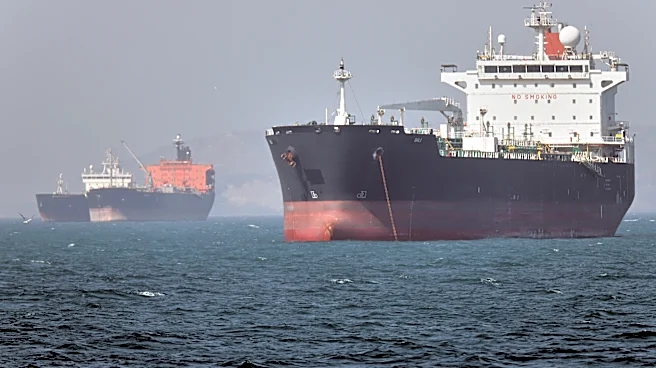
of force if Iran does not cease its attacks and threats to commercial shipping in the region. The situation has intensified following recent exchanges of fire, with the U.S. reporting the destruction of Iranian boats and missile strikes on a UAE oil port. The draft resolution is part of a broader strategy to diplomatically pressure Iran and plan for a post-conflict scenario. The U.S. has also proposed a new multinational maritime coalition, the Maritime Freedom Construct, to establish a security framework for the Middle East and ensure the reopening of the Strait once conditions stabilize.
Why It's Important?
The Strait of Hormuz is a critical waterway for global energy and trade, and any disruption can have significant implications for international markets. The U.S. and Bahrain's support for the UN resolution highlights the strategic importance of maintaining open navigation in this region. The potential for sanctions or military action underscores the seriousness of the situation and the international community's commitment to ensuring maritime security. This development could impact global oil prices and trade routes, affecting economies worldwide. Additionally, the resolution reflects a shift towards multilateral efforts to address regional conflicts, contrasting with previous unilateral actions by the U.S.
What's Next?
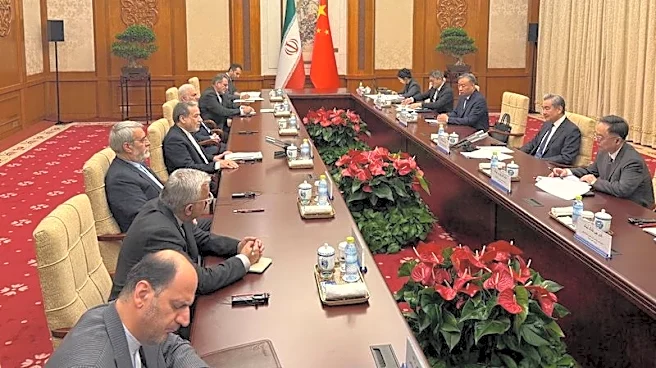
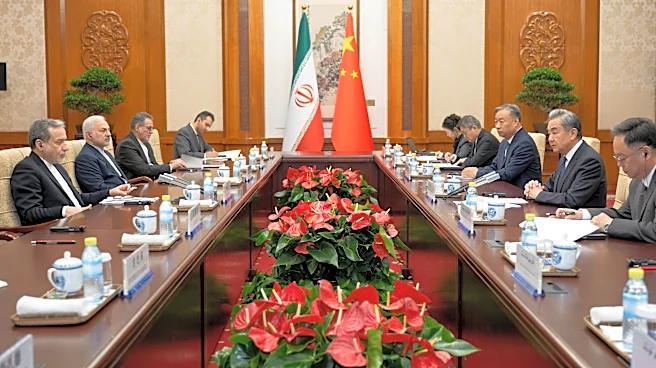
The UN Security Council is expected to begin discussions on the draft resolution, with the aim of circulating a final draft by May 8 and holding a vote shortly thereafter. The outcome will depend on negotiations with other council members, particularly Russia and China, who have proposed a competing text. The U.S. is also coordinating with a Franco-British maritime mission to ensure safe transit through the Strait. The success of these diplomatic efforts will be crucial in stabilizing the region and preventing further escalation.