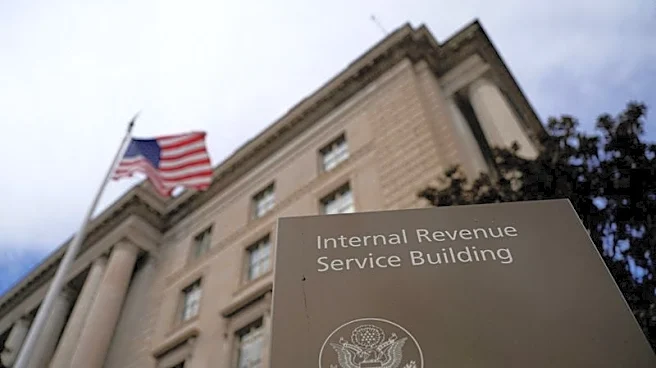








What's Happening?
Taxpayers who missed the April 15 tax deadline are advised to file their returns as soon as possible to avoid accruing further penalties and interest. According to Mark Steber, chief tax officer at Jackson Hewitt Tax Services, filing immediately can help
eliminate the failure-to-file penalty, which can reach up to 25% of any tax owed. The IRS imposes multiple penalties, including failure-to-file, failure-to-pay, and underpayment penalties, which accrue interest daily. Taxpayers are encouraged to pay as much as they can and consider applying for a payment plan to manage any remaining balance. The IRS offers online applications for payment plans, with most applicants receiving immediate approval or denial. Consulting a tax professional early can help taxpayers navigate their options and potentially reduce the total cost of penalties and interest.
Why It's Important?
The advice from tax experts is crucial for taxpayers who missed the deadline, as it provides a pathway to minimize financial repercussions. Filing taxes is a significant financial transaction for many Americans, and managing it effectively can prevent unnecessary financial strain. The penalties for late filing and payment can be substantial, and interest compounds daily, increasing the financial burden. By taking prompt action, taxpayers can mitigate these costs and regain control over their financial situation. This guidance is particularly relevant in the context of ongoing economic challenges, where managing personal finances effectively is critical for many households.
What's Next?
Taxpayers who have missed the deadline should prioritize filing their returns and exploring payment options with the IRS. Those who owe taxes should consider setting up a payment plan to manage their obligations over time. The IRS continues to offer resources and support for taxpayers seeking to understand their options and obligations. As the tax season progresses, taxpayers are encouraged to view filing as part of a long-term financial strategy, rather than a once-a-year obligation, to better manage their financial health.