







What's Happening?
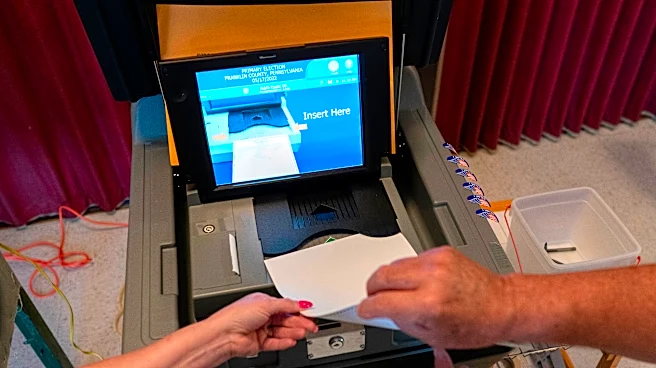
The Pennsylvania Supreme Court has ruled that residents can access spreadsheets of raw voting data to verify election accuracy. This decision clarifies that cast vote records are not exempt from public disclosure under the election code, as they do not constitute
the contents of ballot boxes or voting machines. Justice Daniel D. McCaffery emphasized that this transparency measure is crucial for fostering trust in the electoral process and ensuring the legitimacy of election outcomes. The ruling follows a legal challenge in Lycoming County, where a request for election data was initially denied based on election code rules. The court's decision marks a significant step in promoting electoral integrity without compromising voter secrecy.
Why It's Important?
This ruling is pivotal in enhancing public confidence in the electoral process by allowing greater transparency and accountability. By granting access to voting data, the court aims to reassure the public that elections are conducted fairly and accurately. This decision could influence similar cases across the country, as it sets a precedent for how voter data can be accessed and used to verify election results. The ruling also highlights the balance between transparency and voter privacy, ensuring that while data is accessible, individual voter secrecy is maintained. This could lead to increased public engagement and trust in future elections.
What's Next?
Following this ruling, Pennsylvania counties may need to adjust their policies to comply with the court's decision, potentially leading to increased requests for voting data. Other states may look to Pennsylvania's example when considering their own policies on election transparency. The decision could also prompt further legal challenges as stakeholders navigate the implications of increased data access. Election officials will need to ensure that the release of data does not inadvertently compromise voter privacy or election security.