






What's Happening?
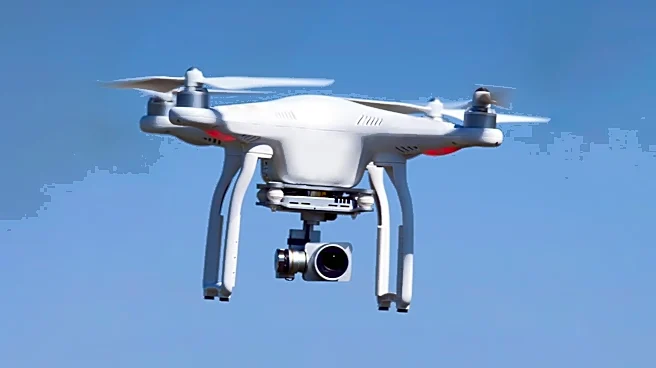
The U.S. Air Force has issued a Request for Information (RFI) to private companies, seeking proposals for a new generation of low-cost target drones. These drones are intended to simulate a wide array of airborne threats, from small hobbyist quadcopters
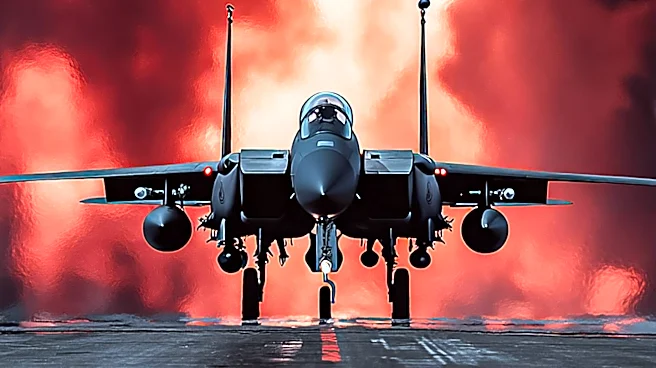
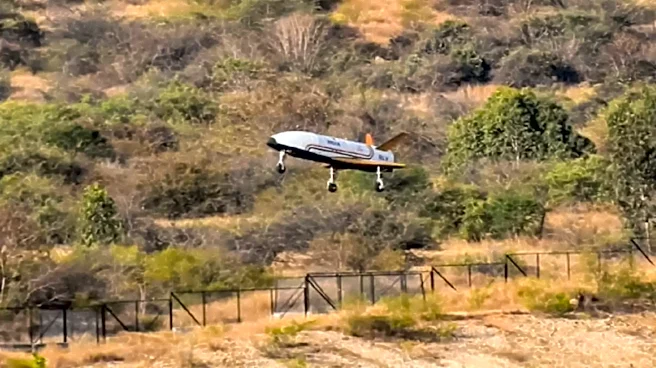
and drone swarms to advanced stealth fighters, strategic bombers, and airborne early warning aircraft. The RFI, open until September 28, aims to identify affordable and scalable systems for testing air-to-air weapons, missile seekers, electronic warfare capabilities, and warhead effectiveness. Specifically, the Air Force requires target drones capable of supersonic speeds (exceeding Mach 1.6 at 40,000 feet), high-agility combat maneuvers, and the ability to replicate precise low-observable Radar Cross-section (RCS) profiles, multi-spectral Infrared (IR) signatures, active RF emissions, and integrated Electronic Attack (EA) capabilities. The goal is to conduct realistic live-fire exercises without risking costly manned aircraft.
Why It's Important?
This initiative is crucial for maintaining the U.S. Air Force's technological edge and ensuring the effectiveness of its air-to-air weapons systems against increasingly sophisticated adversaries. By developing target drones that accurately mimic advanced threats, the Air Force can conduct more realistic and rigorous testing, leading to improved weapon performance and pilot training. The emphasis on low-cost and attritable drones means that these tests can be performed more frequently and without the financial burden of using expensive, full-scale aircraft as targets. This approach directly impacts national security by enhancing the readiness and capabilities of U.S. air forces. It also stimulates innovation within the defense industry, as private companies compete to develop cutting-edge drone technology. The ability to simulate a broad spectrum of threats, from small drones to stealth bombers, addresses the evolving nature of aerial warfare and ensures that U.S. defenses are prepared for diverse challenges.
What's Next?
Following the RFI, the U.S. Air Force will evaluate proposals from private companies, likely leading to contracts for the development and production of these advanced target drones. The next steps will involve detailed design, prototyping, and rigorous testing phases to ensure the drones meet the specified performance and cost requirements. The integration of these new target drones into existing testing protocols will be a significant undertaking, requiring adjustments to training exercises and weapon development cycles. The success of this program could lead to further investment in autonomous systems for other military applications. Additionally, the development of such sophisticated target drones may prompt other nations to invest in similar technologies, potentially accelerating an arms race in drone capabilities and counter-drone measures.
Beyond the Headlines
The development of highly advanced target drones capable of mimicking stealth fighters and other sophisticated aircraft has deeper implications for the future of aerial combat. It signifies a shift towards a more data-driven and simulated approach to military readiness, where the 'enemy' can be precisely replicated and analyzed in a controlled environment. This could lead to a reduction in the need for human pilots in certain training scenarios, raising questions about the role of human-machine teaming in future air forces. Furthermore, the emphasis on 'attritable or expendable' drones highlights a growing trend in military procurement towards systems that are designed to be lost in combat, rather than recovered. This could change the calculus of engagement and the perceived value of individual military assets. The technology developed for these target drones could also have dual-use potential, influencing advancements in commercial drone technology, autonomous flight, and even civilian aerospace testing, albeit with strict regulatory oversight.