







What's Happening?
Following the death of U.S. Senator Lindsey Graham, a debate has emerged regarding his legacy, with President Trump and colleagues offering tributes, while others criticize his 33-year political career. The Howard University Institute for Advanced Study
has initiated an examination of Graham's racial record, leading to a broader study of the historical racial legacy of South Carolina's 'Class Two' Senate seat. This seat, held by Graham for 23 years, has a history of being occupied by senators who supported anti-Black racist policies. Notable figures include Strom Thurmond, a staunch defender of segregation, and John C. Calhoun, who defended slavery as a 'positive good.' The study highlights the role of these senators in shaping and reinforcing systemic racism in U.S. history.
Why It's Important?
The analysis of the historical occupants of South Carolina's 'Class Two' Senate seat underscores the long-standing institutional racism embedded in American politics. This examination is crucial as it sheds light on how past policies and ideologies continue to influence current political and social dynamics. Understanding this legacy is vital for addressing systemic racism and promoting racial equity. The study also serves as a reminder of the importance of scrutinizing the historical context of political positions and their impact on marginalized communities. It highlights the need for ongoing efforts to dismantle racist structures and promote inclusive policies.
What's Next?
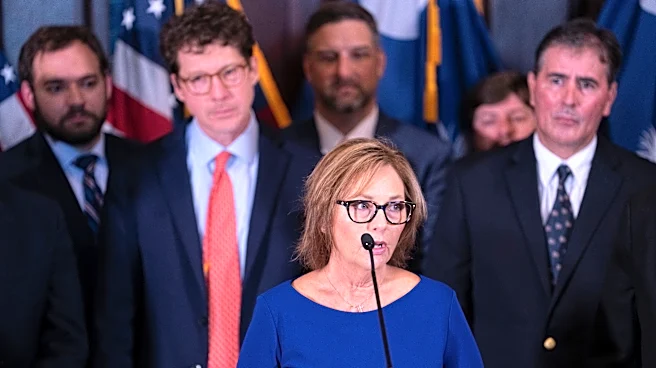
With the appointment of Lindsey Graham's sister, Darline Graham Nordone, to serve the remainder of his term, there may be continued scrutiny and discussion about the future direction of the Senate seat. The historical analysis could influence future political campaigns and policy decisions, particularly in addressing racial issues. Stakeholders, including political leaders and civil rights organizations, may use this information to advocate for more equitable representation and policies. The study could also prompt further research into the racial legacies of other political positions across the United States.