
What's Happening?
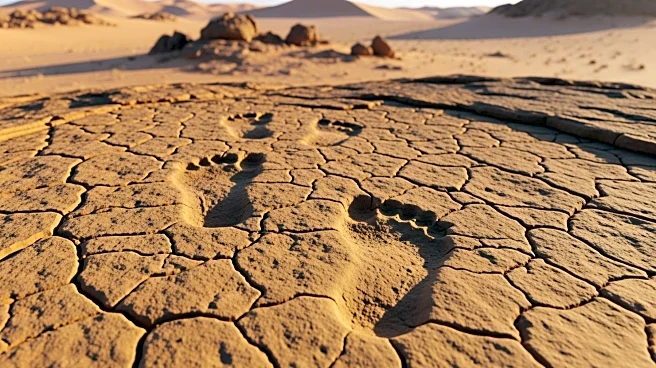
Researchers have uncovered 115,000-year-old human footprints in the Nefud Desert of Saudi Arabia, marking the oldest direct evidence of Homo sapiens in the Arabian Peninsula. The footprints were found
at the Alathar site, a former lakebed, alongside tracks of ancient elephants and camels. The discovery suggests that early humans reached inland Arabia much earlier than previously documented. The site, which lacks tools or bones, indicates a brief human presence likely tied to the need for water during a wetter climatic period. The findings challenge previous theories that Arabia was bypassed during human migration.
Why It's Important?
This discovery is significant as it reshapes the understanding of human migration patterns. It suggests that early humans may have used Arabia as a corridor during favorable climatic conditions, rather than bypassing it. This could lead to a reevaluation of how early humans spread across continents. The presence of human footprints alongside those of large mammals indicates a rich ecosystem that may have supported human life temporarily. This finding also highlights the potential for further archaeological discoveries in the region, which could provide more insights into early human behavior and migration.
What's Next?
Future research may focus on uncovering more evidence of early human activity in Arabia, potentially leading to new insights into migration routes and timelines. Archaeologists may conduct further excavations at the Alathar site and other similar locations to find additional artifacts or fossils. This could help clarify the extent and nature of human presence in the region during the last interglacial period. Additionally, the study of climatic conditions during this period may provide a better understanding of how environmental changes influenced human migration.