






What's Happening?
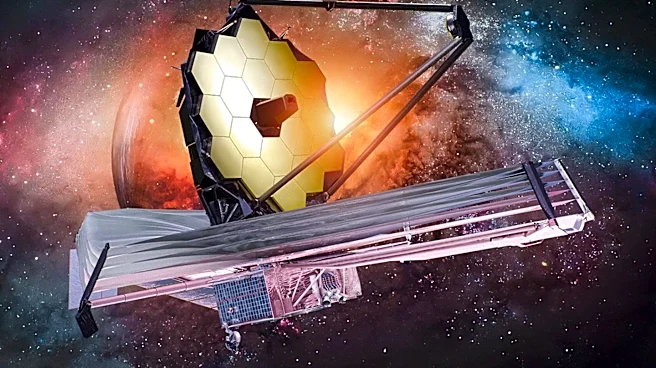
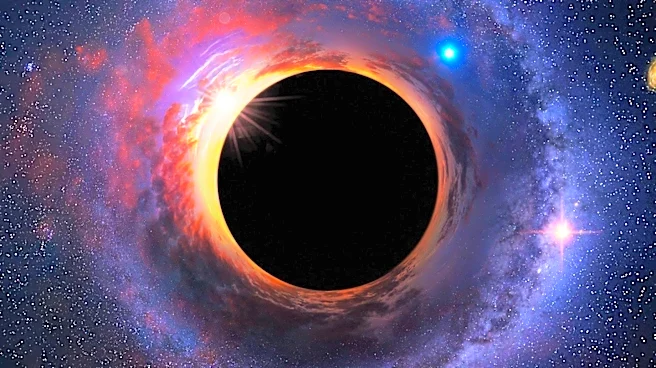
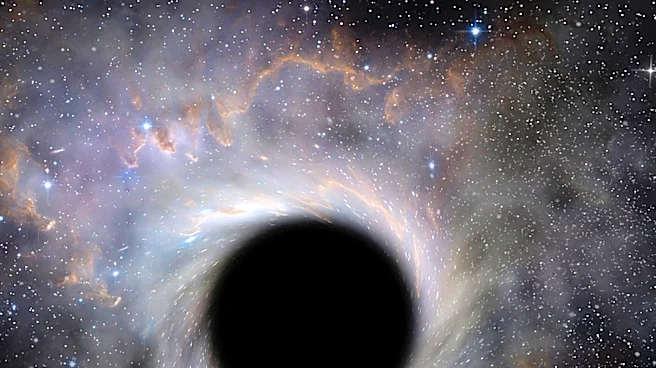
NASA is preparing to launch the Nancy Grace Roman Space Telescope on August 30, 2026, which is expected to provide new insights into the growth of supermassive black holes. The telescope will focus on tidal disruption events (TDEs), where stars are torn
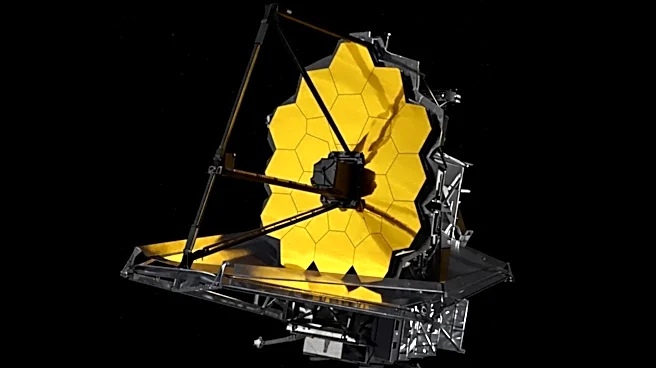
apart by the gravitational forces of black holes. These events are crucial for understanding how supermassive black holes, which are found at the centers of galaxies, grow so rapidly. The Roman Space Telescope will conduct a High-Latitude Time-Domain Survey, revisiting a large area of the sky to detect and study these events. This mission aims to solve the puzzle of how supermassive black holes formed so early in the universe's history, as observed by the James Webb Space Telescope.
Why It's Important?
The Roman Space Telescope's ability to detect TDEs will help scientists understand the early growth of supermassive black holes, which are essential components of galaxy formation and evolution. By studying these events, researchers can test theories about black hole formation, such as whether they grow from 'light seeds' or 'heavy seeds.' This knowledge is vital for constructing accurate models of the universe's history and the role of black holes in shaping galaxies. The findings could also impact our understanding of the universe's structure and the processes that govern cosmic evolution.
What's Next?
Following its launch, the Roman Space Telescope will begin its survey, potentially detecting thousands of TDEs annually. This data will allow scientists to compare the frequency and characteristics of these events across different cosmic epochs, providing a clearer picture of black hole growth. The results could lead to new theories or modifications of existing models regarding the formation and evolution of supermassive black holes. The scientific community will closely monitor the telescope's findings, which may prompt further research and exploration missions.