





What's Happening?
NASA Administrator Jared Isaacman has announced that the agency will unveil a new experimental X-plane at the upcoming MAX POWER aerospace exhibition at Kennedy Space Center in Florida. This announcement, made during an October 30 episode of NASASpaceFlight’s
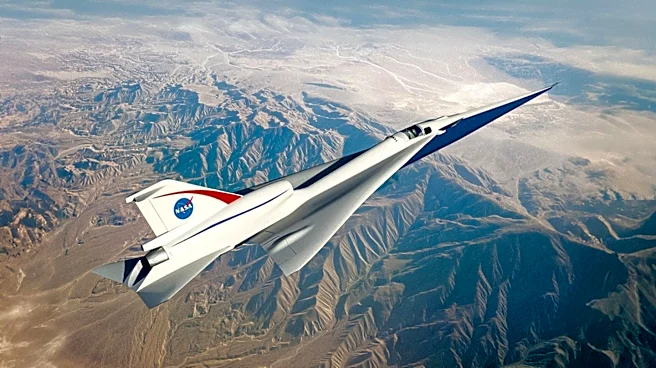
The Flame Trench podcast, signifies NASA's commitment to expanding its experimental aircraft programs. While Isaacman confirmed the existence of a new X-plane, he did not disclose specific details regarding its design, capabilities, or intended research mission. This initiative aligns with a May directive from Isaacman calling for increased X-plane development, particularly for experimental airframes and propulsion systems designed to support future civil, commercial, and national security aviation applications. The exhibition, scheduled for November 6-8, will also feature aircraft demonstrations, technology exhibits, and an appearance by NASA’s X-59 quiet supersonic research aircraft.
Why It's Important?
The introduction of a new X-plane underscores NASA's ongoing efforts to push the boundaries of aeronautical research and development. These experimental aircraft are crucial for testing advanced technologies that can revolutionize aviation, leading to more efficient, quieter, and safer air travel. By expanding its X-plane programs, NASA aims to foster innovation that will benefit various sectors, including commercial aviation, national security, and future space transportation systems. The development of such cutting-edge aircraft can also stimulate economic growth by creating jobs in aerospace engineering, manufacturing, and related industries. Furthermore, these projects maintain the United States' leadership in aeronautical science and technology, ensuring its competitive edge in the global aerospace arena.
What's Next?
The official unveiling of the new X-plane at the MAX POWER aerospace exhibition will provide the first public details about its design and mission objectives. Following the announcement, NASA will likely proceed with ground testing, initial flight tests, and subsequent research campaigns to evaluate the aircraft's performance and the technologies it incorporates. The data gathered from these tests will be critical for informing future aircraft designs and aviation regulations. Depending on the X-plane's specific focus, its development could lead to breakthroughs in areas such as supersonic flight, sustainable aviation fuels, advanced propulsion systems, or autonomous flight capabilities. The success of this new X-plane will contribute to NASA's broader goals of advancing aviation for societal benefit.
Beyond the Headlines
The continuous development of X-planes represents more than just technological advancement; it embodies a commitment to scientific inquiry and the pursuit of the unknown in aviation. These projects often involve interdisciplinary collaboration between government agencies, academic institutions, and private industry, fostering a rich ecosystem of innovation. The long-term implications of such research can be profound, potentially leading to entirely new modes of air travel, reduced environmental impact from aviation, and enhanced national security capabilities. The X-plane program serves as a vital incubator for ideas that might seem futuristic today but could become commonplace in decades to come, shaping the future of how humans and goods move through the skies.