





What's Happening?
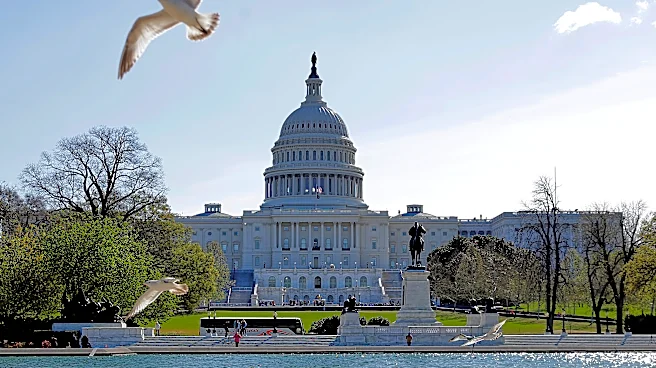
The U.S. House of Representatives has voted to direct the Department of Homeland Security (DHS) to extend Temporary Protected Status (TPS) for several hundred thousand Haitians residing in the United States. The bipartisan bill, H.R. 1689, passed with
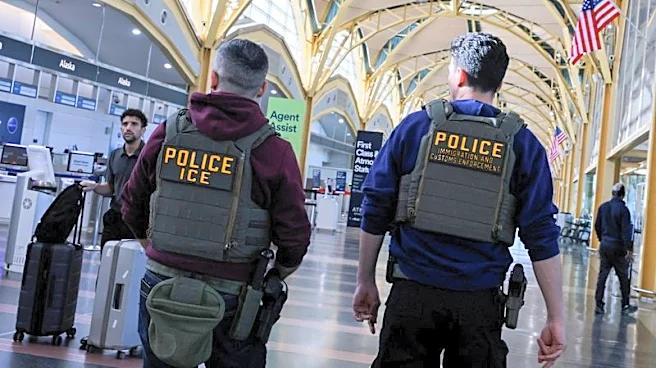
a 224-204 vote, despite efforts by the Trump administration to eliminate these protections. The bill's future in the GOP-controlled Senate remains uncertain. The Supreme Court is set to hear arguments regarding the Trump administration's plans to terminate TPS for 350,000 Haitians and 6,000 Syrians. The TPS program allows individuals from countries deemed unsafe due to conditions like armed conflict to remain in the U.S. for up to 18 months. DHS has already removed TPS designations for 13 countries, leading to numerous court challenges. The outcome of the Supreme Court case could significantly impact immigrants' ability to contest the removal of these protections.
Why It's Important?
The extension of TPS for Haitians is crucial as it affects a significant portion of the direct care workforce, particularly in states like Florida. Health-care providers, economists, and local governments have expressed concerns about the negative consequences of lifting these protections. The decision by the Supreme Court will have far-reaching implications for immigrants' rights and the ability to challenge the removal of humanitarian protections. The House's use of a discharge petition to force the vote highlights a growing trend of bipartisan efforts to address immigration issues, despite opposition from GOP leadership. This legislative action underscores the ongoing debate over immigration policy and the balance between humanitarian concerns and national security.
What's Next?
The bill now faces an uncertain future in the Senate, where Republican control may hinder its progress. The Supreme Court's upcoming decision will be pivotal in determining the fate of TPS for Haitians and Syrians. If the court rules in favor of the Trump administration, it could lead to the deportation of thousands of immigrants currently protected under TPS. Conversely, a ruling against the administration could reinforce the legal grounds for maintaining TPS designations. Stakeholders, including immigrant advocacy groups and local governments, are likely to continue lobbying for the extension of TPS and other humanitarian protections.