



What's Happening?
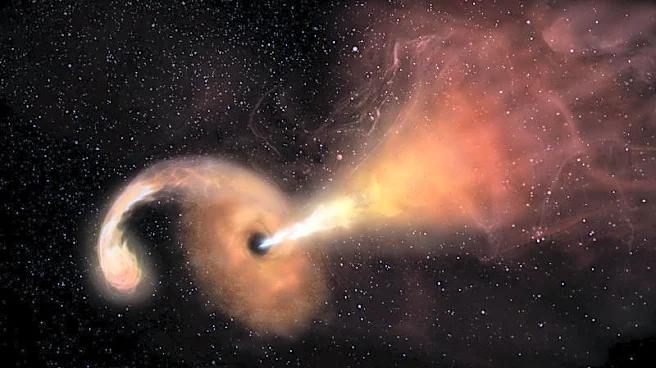
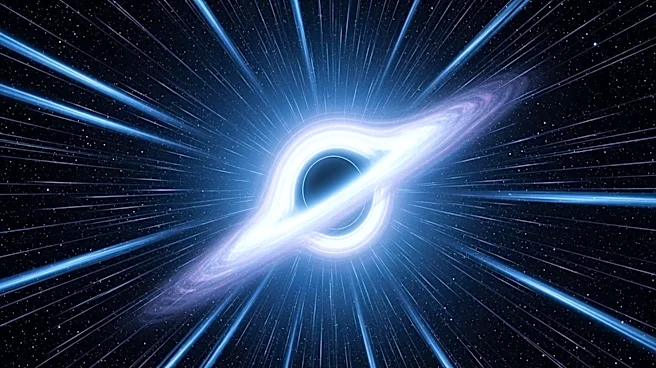
After a 50-year search, astronomers have found evidence of powerful winds emanating from Sagittarius A* (Sgr A*), the supermassive black hole at the center of the Milky Way. This discovery was made using data from the Atacama Large Millimeter/Submillimeter
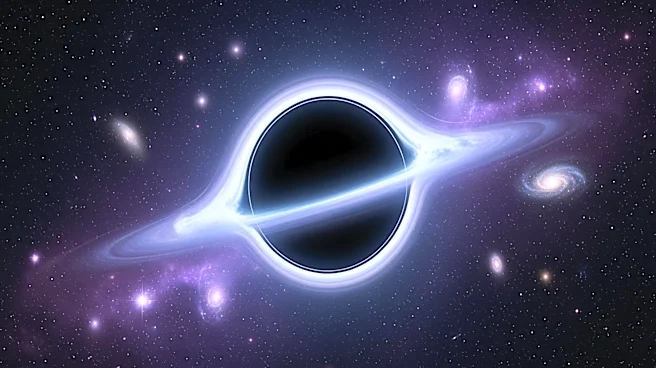
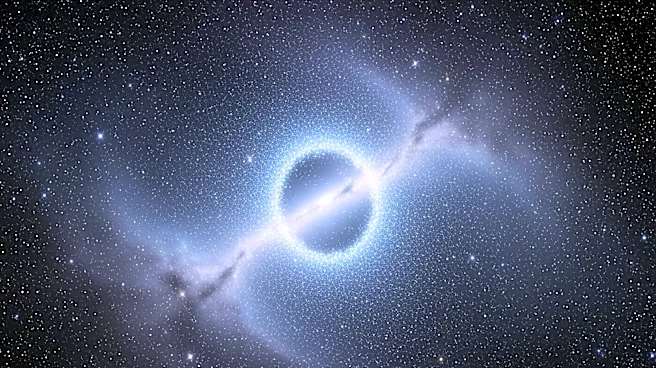
Array (ALMA) in Chile and NASA's Chandra X-ray Observatory. The findings reveal a large conical cavity filled with hot, electrically charged gas, sculpted by the black hole's winds. These winds have displaced or heated the cold gas in the region, indicating that the energy required to create such a cavity could only be generated by a supermassive black hole. Sgr A* is about 4 million times the mass of the sun and is located approximately 26,000 light-years from Earth. This discovery enhances the understanding of the physics surrounding supermassive black holes and the dynamics at the heart of the Milky Way.
Why It's Important?
The discovery of winds from Sgr A* is significant as it resolves a long-standing mystery in astronomy and provides insights into the behavior of supermassive black holes. Understanding these winds is crucial because they play a role in regulating the growth of black holes and the evolution of galaxies. The findings suggest that even a relatively quiet black hole like Sgr A* can have a substantial impact on its surroundings. This discovery also highlights the similarities between Sgr A* and other supermassive black holes, suggesting that our galaxy's center is not unique. The research could lead to a better understanding of the lifecycle of galaxies and the role of black holes in cosmic evolution.
What's Next?
Future research will likely focus on further analyzing the data from ALMA and Chandra to understand the dynamics of the winds and their impact on the Milky Way. Scientists may also explore the implications of these findings for other galaxies and their central black holes. Continued observations could provide more detailed insights into the mechanisms driving these winds and their long-term effects on galactic environments. Additionally, this discovery may prompt new theoretical models to explain the behavior of supermassive black holes in different stages of activity.
Beyond the Headlines
The discovery of black hole winds from Sgr A* also raises questions about the broader implications for our understanding of the universe. It challenges previous assumptions about the uniqueness of our galaxy's center and suggests that similar processes may be occurring in other galaxies. This finding could influence future research on the role of black holes in galaxy formation and evolution. Moreover, it underscores the importance of advanced observational technologies like ALMA and Chandra in uncovering hidden aspects of the universe.