

What's Happening?
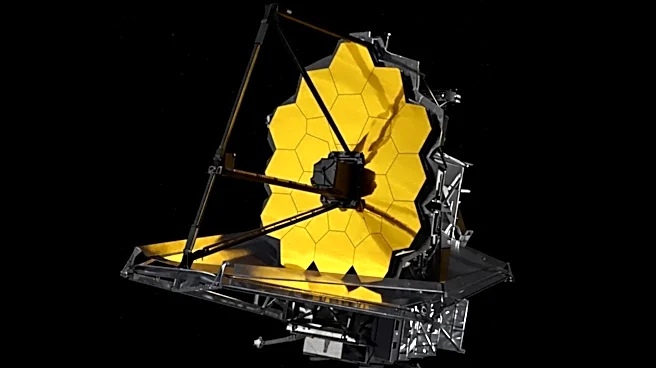
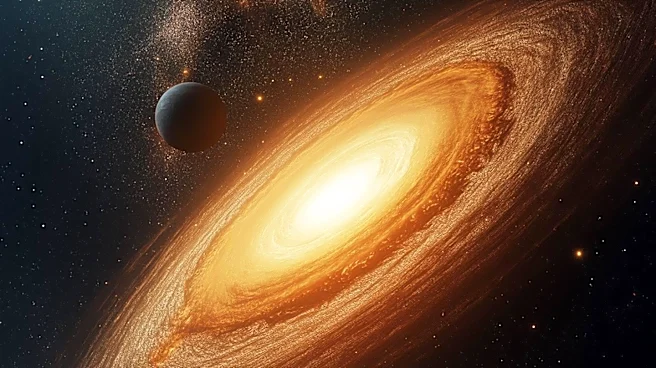
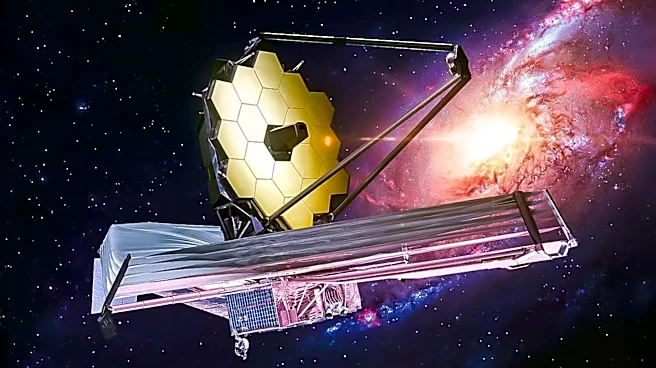
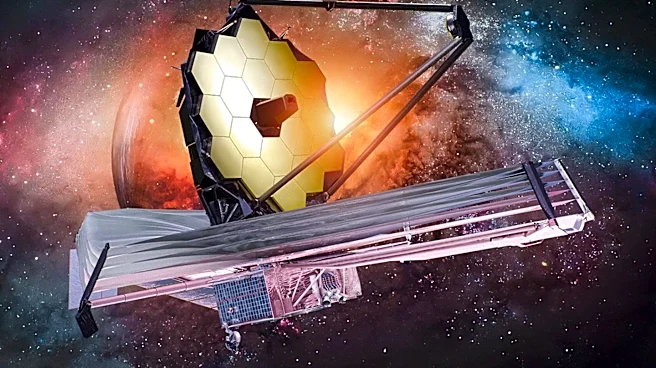
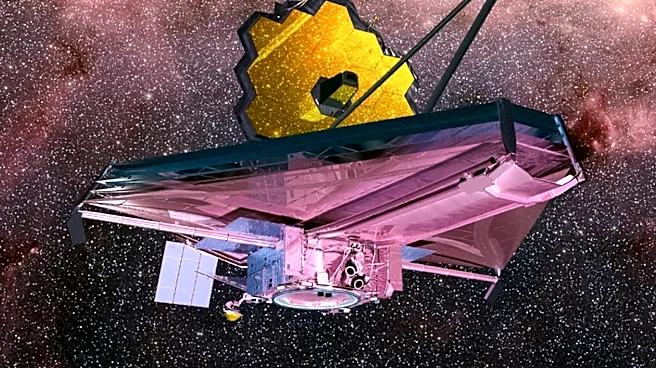
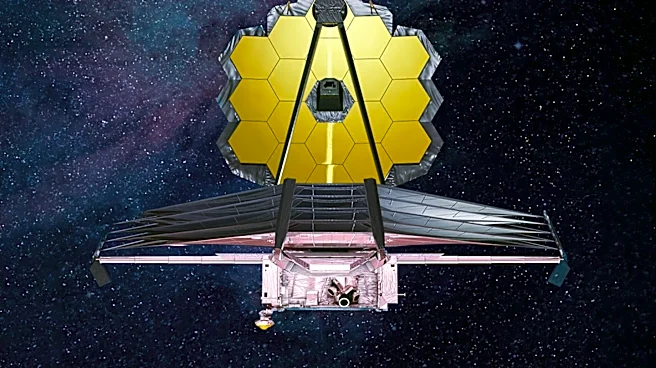
The James Webb Space Telescope (JWST) has observed a phenomenon known as 'Little Red Dots,' which are cosmic objects appearing around 600 million years after the Big Bang. These objects have puzzled astronomers due to their apparent disappearance before
the universe reaches about 2 billion years old. Recent research suggests that these 'Little Red Dots' may evolve into globular clusters, which are vast conglomerations of densely packed stars. Globular clusters are typically found in large galaxies, including the Milky Way, which hosts at least 150 of them. The research proposes that these clusters may have formed from supermassive stars, which are short-lived but capable of producing the unusual chemical compositions observed in globular clusters today.
Why It's Important?
This discovery is significant as it provides insights into the formation and evolution of globular clusters, which are key components of galaxies. Understanding the transformation of 'Little Red Dots' into globular clusters could help astronomers reconstruct the conditions of the early universe and the processes that led to the formation of galaxies. This research also challenges existing theories about the lifecycle of cosmic structures and the role of supermassive stars in shaping the universe. The findings could have implications for our understanding of stellar evolution and the chemical enrichment of galaxies, potentially influencing future astronomical studies and models.
What's Next?
Further observations and research are needed to confirm the connection between 'Little Red Dots' and globular clusters. Astronomers may focus on identifying more 'Little Red Dots' and studying their properties to better understand their evolution. Additionally, the JWST and other telescopes could be used to observe these objects in greater detail, potentially revealing more about their composition and the processes that lead to their transformation. The scientific community may also explore alternative explanations for the 'Little Red Dots,' considering other cosmic phenomena that could account for their characteristics.