








What's Happening?
Carnegie Mellon University (CMU) is launching its America250 programming to commemorate the sestercentennial of American independence. This year-long series of events will reflect on the nation's founding documents and engage with questions shaping its future.
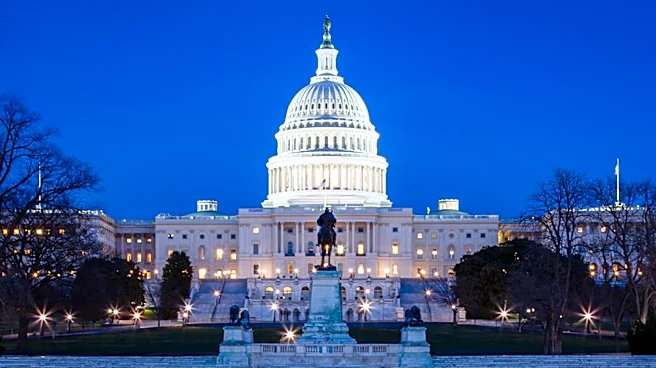
CMU, which evolved from a trade school to a leading research university in 125 years, is showcasing its historical and ongoing contributions to U.S. innovation and policy. The university's researchers actively engage with members of Congress on Capitol Hill regarding artificial intelligence technologies and prepare the next generation of workers for the changing economy. CMU's work includes cognitive tutors benefiting over 500,000 high school students annually, and its AI Science Foundry was selected by the U.S. National Science Foundation (NSF) to build national infrastructure for AI-enabled scientific discovery. Additionally, CMU plays a central role in a new NSF Regional Innovation Engine for Appalachia, focusing on energy technology, manufacturing competitiveness, and economic opportunity. The university is also leading three projects funded by the U.S. Department of Energy's (DOE) Genesis Mission, aiming to transform scientific breakthroughs.
Why It's Important?
Carnegie Mellon University's extensive involvement in national initiatives underscores the critical role of academic institutions in shaping the future of the United States. Its contributions to artificial intelligence, educational methodologies, and energy technology directly impact U.S. economic competitiveness, national security, and societal well-being. The university's engagement with Congress highlights the importance of research-driven insights in policy-making, ensuring that legislative decisions are informed by cutting-edge scientific and technological advancements. Furthermore, CMU's efforts in workforce development and regional economic revitalization, particularly in Appalachia, demonstrate how higher education can address pressing national challenges and foster inclusive growth. The university's historical trajectory, from a trade school to a global research powerhouse, serves as a microcosm of American progress and innovation, emphasizing the enduring value of education and research in national development.
What's Next?
As part of its America250 programming, Carnegie Mellon University will host a symposium on Constitution Day, initiating a year of reflection and engagement on national issues. The university will continue its research and development efforts in artificial intelligence, clean energy, and educational technologies, aiming to further integrate these advancements into U.S. policy and industry. CMU's participation in the NSF Regional Innovation Engine and DOE's Genesis Mission indicates ongoing collaboration with federal agencies to drive scientific discovery and economic development. The university will also likely expand its outreach and educational programs, such as the cognitive tutors, to impact more students and prepare them for future careers. The America250 celebration will provide a platform for CMU to highlight its past achievements and articulate its vision for contributing to the nation's next 250 years, fostering public discourse on critical topics.
Beyond the Headlines
Carnegie Mellon University's narrative, particularly its evolution and impact, reflects a deeper American story of progress through innovation and education. The university's commitment to addressing societal challenges, from workforce development to national security, illustrates the symbiotic relationship between academic research and national advancement. The emphasis on AI and clean energy points to the long-term strategic priorities for the U.S. economy and environment. Moreover, CMU's historical contributions, such as the development of Kevlar and Wi-Fi, highlight how foundational research can lead to transformative technologies that profoundly shape daily life. The America250 programming offers an opportunity not just for celebration, but for critical self-reflection on the nation's past, present, and future, with CMU positioning itself as a key player in shaping that future through its intellectual capital and technological prowess. This engagement also underscores the ethical considerations inherent in rapidly advancing fields like AI, prompting discussions on responsible innovation.