







What's Happening?
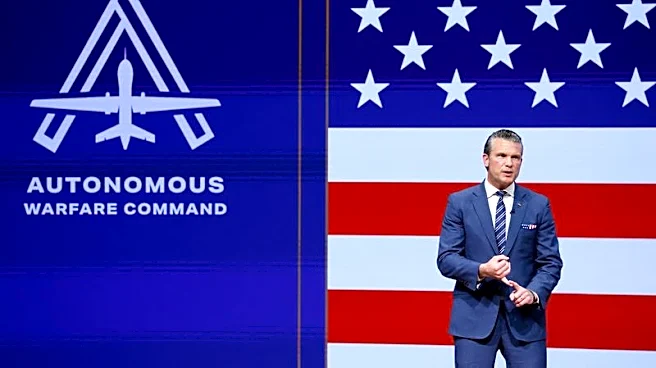
The increasing integration of commercial Artificial Intelligence (AI) into the U.S. defense sector is raising significant data privacy, security, and data rights considerations. While the Pentagon seeks commercial AI solutions and AI companies aim for
defense contracts, the critical terms of these agreements often revolve around data handling rather than just algorithmic performance. Key concerns include how government, prime contractor, or subcontractor data will be used to train, fine-tune, or improve AI models, and whether customer data appearing in prompts, outputs, logs, or telemetry will be processed or retained. The deployment environment of AI solutions—whether in a defense agency, customer-controlled, or provider-hosted SaaS—also dictates varying requirements for data protection. Contracts must clearly define data rights, especially concerning Controlled Unclassified Information (CUI), and address potential government ownership of modifications or customizations to AI deliverables. Companies are advised to map data flows, classify data, and review privacy, cybersecurity, AI governance, and government contracting issues comprehensively before negotiating defense-related contracts.
Why It's Important?
The intersection of commercial AI and defense data is critically important due to the sensitive nature of military and national security information. Inadequate data privacy and security protocols could lead to severe consequences, including intelligence breaches, compromise of operational capabilities, and erosion of national security. The lack of clear contractual terms regarding data usage and ownership can create legal ambiguities and intellectual property disputes between government entities and private AI providers. Furthermore, the potential for CUI to enter commercial environments necessitates stringent compliance with standards like NIST SP 800-171 and Cybersecurity Maturity Model Certification (CMMC) requirements. This situation highlights the challenge of leveraging cutting-edge commercial technology for defense purposes while simultaneously safeguarding highly classified and sensitive data, impacting both national security and the competitive landscape for AI companies seeking government contracts.
What's Next?
Companies pursuing defense contracts involving AI will need to prioritize comprehensive due diligence, meticulously mapping data flows and classifying data types. Contract negotiations will increasingly focus on explicit terms regarding data usage, retention, and ownership, particularly for training and improving AI models. The General Services Administration (GSA) has proposed rules on safeguarding AI systems and intellectual property rights, which, if finalized, could impose additional obligations on AI providers regarding government data, incident reporting, and ownership of custom developments. This will necessitate a collaborative approach between legal, cybersecurity, and AI governance teams within companies to ensure compliance and mitigate risks. The defense sector will likely continue to develop and refine its procurement processes to address these complex data-related challenges, potentially leading to new industry standards for AI in national security applications.
Beyond the Headlines
The integration of commercial AI into defense operations raises profound ethical and strategic questions beyond immediate data security. The reliance on commercial models means that the underlying data used for training could inadvertently introduce biases or vulnerabilities into critical defense systems. The 'data rights' clauses in defense contracts are not merely about privacy but also about intellectual property and control over technological advancements, which can significantly impact a company's product strategy and valuation. This scenario also highlights the tension between the rapid innovation cycles of commercial AI and the stringent security and regulatory requirements of the defense sector. The long-term implications could include a redefinition of public-private partnerships in technology, with a greater emphasis on shared responsibility for data integrity and national security in the age of AI.