


What's Happening?
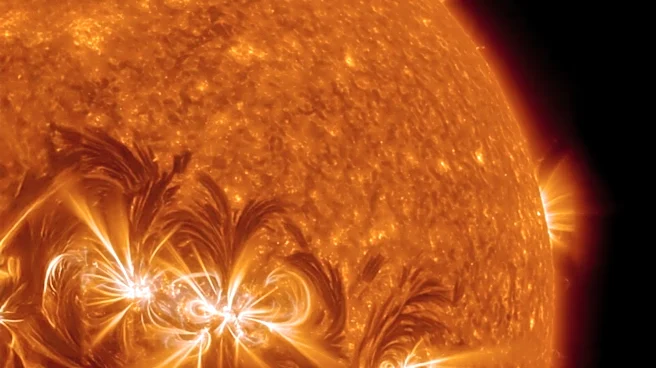
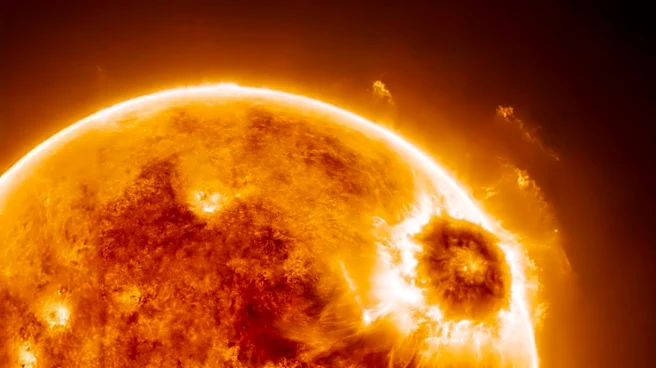
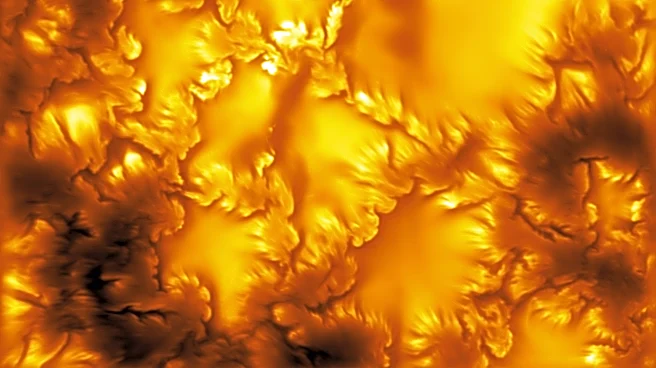
Astronomers have captured unprecedented images of plasma waves on the sun's surface using the world's largest solar telescope. These images reveal vortices as small as 12 miles wide, providing new insights into the sun's dynamic atmosphere. The study,
published in Nature, highlights the role of Kelvin-Helmholtz instabilities, which occur when two fluids move at different speeds, creating waves and vortices. This discovery was made possible by combining data from the Daniel K. Inouye Solar Telescope in Hawaii with advanced computer simulations.
Why It's Important?
This breakthrough enhances our understanding of solar dynamics, which is crucial for predicting solar activity that can impact Earth's space weather. Understanding these plasma waves can help scientists better anticipate solar flares and coronal mass ejections, which can disrupt satellites, power grids, and communication systems on Earth. The research also contributes to the broader field of fluid dynamics, offering insights that could be applied to other planetary atmospheres and astrophysical phenomena.