







What's Happening?
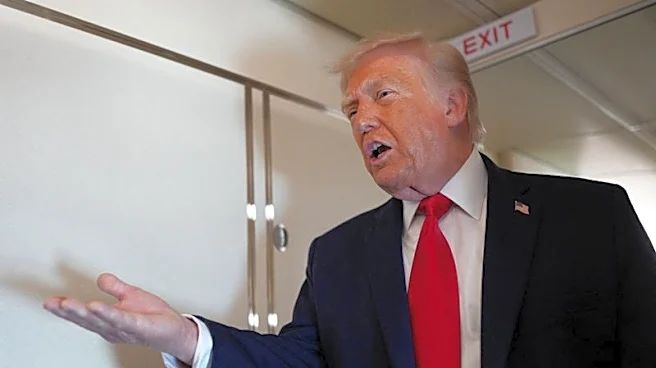
President Donald Trump has canceled planned military strikes against Iran, reversing earlier threats of further action. This decision comes amid ongoing negotiations aimed at resolving tensions between the two nations. The announcement was made via social
media, where President Trump indicated that discussions had reached senior levels of Iran's leadership, suggesting progress towards a potential agreement. The cancellation of the strikes has eased immediate concerns about disruptions to regional oil supplies, as evidenced by a sharp drop in oil prices. Despite these developments, Iran has not formally confirmed any agreement, and the U.S. naval blockade of Iran remains in place. The situation follows the collapse of a two-month ceasefire and involves regional mediators such as Qatar.
Why It's Important?
The decision to cancel military strikes on Iran is significant for global energy markets, particularly concerning the Strait of Hormuz, a critical oil transit route. The potential for military conflict in the region had raised fears of disruptions to oil supplies, which could have led to increased oil prices and economic instability. By opting for diplomacy, President Trump has temporarily alleviated these concerns, leading to a decrease in oil prices. However, the ongoing U.S. naval blockade and Iran's stance on the Strait of Hormuz indicate that tensions remain high. The outcome of these negotiations could have far-reaching implications for international relations and energy markets.
What's Next?
The next steps involve continued negotiations between the U.S. and Iran, with regional stakeholders playing a crucial role. The U.S. has maintained that commercial shipping continues through the Strait of Hormuz, but Iran's position on keeping the waterway closed adds complexity to the situation. The resolution of these negotiations will be closely monitored by global markets, as any prolonged disruption could impact oil prices and global petroleum inventories. Stakeholders, including countries in the region and international energy companies, will be watching for any signs of a formal agreement or further escalation.