







What's Happening?
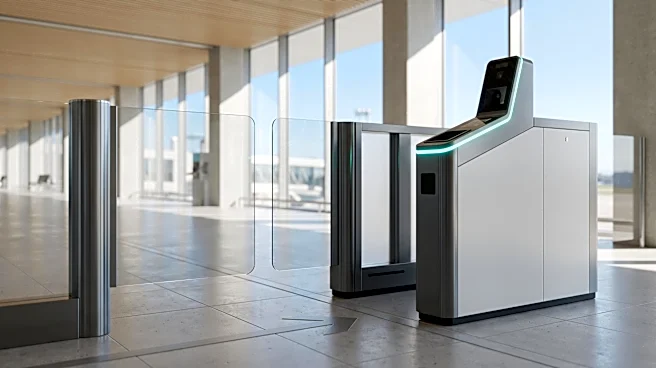
The UK has begun rolling out a new contactless border system at its airports, with the goal of making e-gates passport-free by early 2027. Initially launched at East Midlands Airport for British citizens, the system uses facial comparison technology to
verify a traveler's identity. Passengers will have their photo taken at an e-gate, which then checks the live image against verified immigration, travel, and passport information. If the checks are clear, the barrier automatically opens. This initiative is part of a phased rollout that will extend to all UK e-gates across 15 air and rail ports, including major hubs like Heathrow and Gatwick. The new system is expected to be up to 25% faster than traditional passport checks and will eventually be accessible to other eligible nationalities, in addition to UK and Irish citizens and those with an Electronic Travel Authorisation (ETA).
Why It's Important?
This development in UK border control has significant implications for international travel and security protocols. For U.S. citizens traveling to the UK, while initially limited to British citizens, the eventual expansion to other eligible nationalities could streamline entry processes, reducing wait times and enhancing the overall travel experience. The adoption of facial recognition technology at this scale signifies a growing global trend towards biometric-based identity verification, which could influence similar advancements in U.S. airports and border security. This shift also raises questions about data privacy and the security of biometric information, which will be crucial considerations as these systems become more widespread. Furthermore, the increased efficiency at UK borders could indirectly impact U.S. airlines and travel agencies by making the UK a more attractive destination, potentially boosting transatlantic travel and tourism.
What's Next?
The UK government plans to upgrade all its e-gates by early 2027 and expand accessibility to other eligible nationalities. While currently available at East Midlands Airport, the technology will be rolled out across Birmingham, Bristol, Cardiff, Edinburgh, Gatwick, Glasgow, Heathrow, London City, Luton, Manchester, Newcastle, and Stansted airports. Border Force officers will remain on hand to monitor e-gates and offer assistance, and travelers are advised to keep their physical passports with them at all times, as further checks may still require them. For dual British nationals, the advice is to return to the UK with a valid British passport or a Certificate of Entitlement to avoid potential delays. The phased implementation suggests a continuous evaluation and refinement of the system as it expands, with a focus on balancing efficiency with security.
Beyond the Headlines
The move towards passport-free travel at UK airports represents a significant step in the evolution of identity verification and border management, with deeper implications for the concept of national borders in the digital age. By relying on facial comparison technology and digital records, the physical passport, while still necessary, becomes less central to the immediate entry process. This shift could lead to a re-evaluation of how identity is established and verified in various contexts, potentially paving the way for more integrated digital identity systems globally. Ethically, the widespread use of facial recognition technology at borders raises concerns about surveillance, data retention, and potential biases in algorithms. The long-term societal impact could include a greater acceptance of biometric data as a primary form of identification, alongside ongoing debates about privacy rights and government access to personal information. This technological advancement pushes the boundaries of convenience and security, prompting a broader discussion on the future of travel and personal data protection.