









What's Happening?
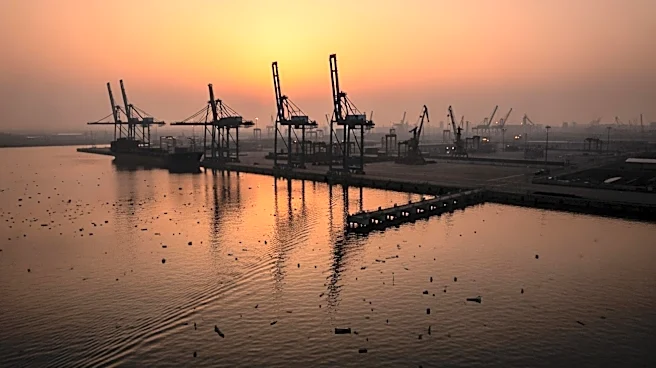
The Ukrainian military has conducted a significant strike on the Russian-occupied Mariupol Sea Commercial Port, targeting key facilities and disrupting Moscow's military logistics in the southern occupied territories. The operation, coordinated with the National
Guard's 1st Corps 'Azov,' the Security Service of Ukraine (SBU), and the Special Operations Center 'A,' resulted in substantial damage to energy, repair, and administrative infrastructure. The port, a crucial logistical node for Russian forces since its occupation in 2022, was left without electricity, severely limiting its operational capacity. This attack follows earlier strikes on June 5, 2026, which destroyed eight fuel storage tanks and damaged nine others.
Why It's Important?
The strike on Mariupol port is a strategic move by Ukraine to weaken Russian logistical capabilities in the region. By targeting a key supply hub, Ukraine aims to disrupt the flow of military resources and personnel, potentially hindering Russian operations in southern Ukraine. This action could shift the balance of power in the ongoing conflict, as it directly impacts Russia's ability to sustain its military presence and operations. The attack also highlights Ukraine's increasing capability to conduct precise and impactful military operations, which could influence future engagements and negotiations.
What's Next?
Following the attack, Russian authorities may seek to reinforce their logistical routes and infrastructure to mitigate the impact of such strikes. Ukraine is likely to continue targeting strategic locations to further disrupt Russian operations. The international community will be closely monitoring these developments, as they could lead to escalations or shifts in diplomatic efforts to resolve the conflict. Additionally, Russia may respond with increased military actions or seek to fortify its occupied territories against further Ukrainian advances.