


What's Happening?
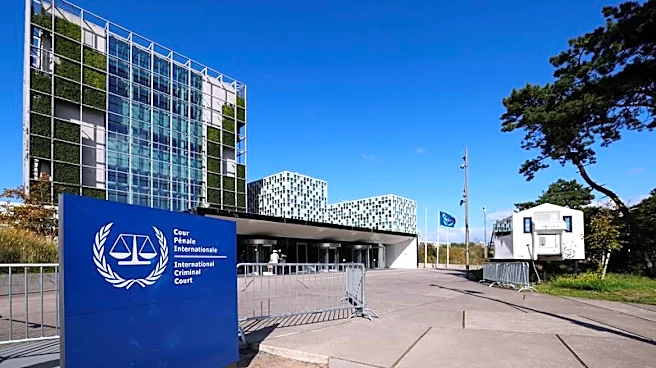
The United States has imposed sanctions on International Criminal Court (ICC) President Tomoko Akane and senior trial lawyer Abdoulaye Seye. Secretary of State Marco Rubio announced these measures, which escalate the Trump administration's ongoing campaign
against the Hague-based court. Both Akane, a Japanese judge, and Seye, a Senegalese national, were sanctioned under an executive order signed by President Trump last year. This order authorizes sanctions against the ICC. The U.S. alleges that these individuals have directly participated in ICC efforts to investigate, arrest, detain, or prosecute officials whose governments have not consented to the court's jurisdiction. The U.S. is not a member of the ICC, which was established in 2002 to prosecute war crimes, genocide, and crimes against humanity. This action follows previous targeted sanctions imposed last year on several ICC officials, including prosecutors and judges. The U.S. cited the court's arrest warrants for Israeli Prime Minister Benjamin Netanyahu and former Israeli Defence Minister Yoav Gallant, as well as a prior ICC investigation into U.S. troops in Afghanistan, as reasons for these sanctions.
Why It's Important?
These sanctions are significant as they represent a direct challenge by the U.S. to the authority and legitimacy of an international judicial body. By targeting the ICC's leadership, the Trump administration is signaling its strong opposition to the court's jurisdiction over U.S. and allied personnel. The measures, which include freezing any U.S. assets held by the sanctioned individuals and effectively cutting them off from the U.S. financial system, could hinder the ICC's operational capacity and its ability to conduct investigations. This move could also set a precedent for other nations to disregard international legal institutions, potentially weakening the global framework for prosecuting severe international crimes. The U.S. stance underscores a broader debate about national sovereignty versus international justice, with the U.S. asserting that its citizens should not be subject to the jurisdiction of a court to which it is not a party. The sanctions could also strain diplomatic relations with countries that support the ICC and its mandate.
What's Next?
The U.S. Treasury Department has issued a general license allowing transactions involving Akane to be wound down through September 17, indicating a temporary period for compliance. Secretary Rubio has previously stated that the administration intends to intensify its efforts to undermine the ICC, including through a diplomatic campaign aimed at persuading other countries to withdraw from the institution. This suggests that further actions against the ICC or its member states could be forthcoming. Three ICC judges have already sued President Trump and his administration in June, arguing that the sanctions are unlawful, indicating potential legal challenges to these measures. The ICC's response to these sanctions will be crucial, as it navigates continued pressure from the U.S. while striving to uphold its mandate. The international community will likely monitor these developments closely, as they could influence the future of international criminal justice and the role of the ICC.
Beyond the Headlines
The U.S. sanctions against the ICC leadership highlight a deeper ideological conflict regarding international law and national sovereignty. While the ICC aims to provide a forum for justice for the most heinous crimes when national courts are unwilling or unable to act, the U.S. maintains that its personnel should not be subject to the court's jurisdiction, especially given its non-membership. This tension raises questions about the universality of international legal principles and the enforcement mechanisms available to international bodies. The Trump administration's actions could be seen as part of a broader trend of challenging multilateral institutions and agreements, potentially leading to a more fragmented international legal order. The ethical implications of sanctioning judicial officials for performing their duties, even if those duties conflict with a powerful nation's interests, are also significant. This situation could prompt a re-evaluation of the ICC's structure and its relationship with non-member states, particularly those with significant global influence.