

What's Happening?
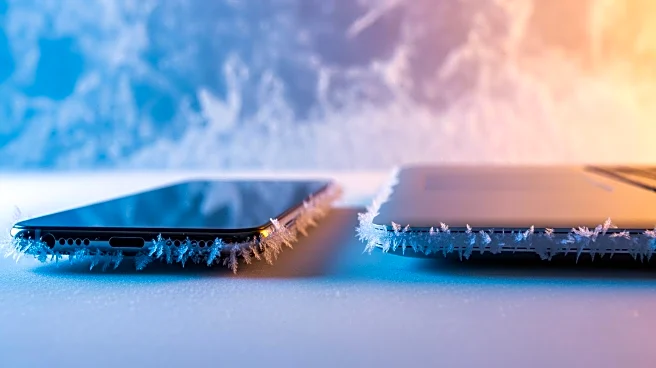
As a severe winter storm approaches the U.S., with wind chills expected to drop as low as -50 degrees Fahrenheit, tech companies are advising users on how to protect their smartphones and smartwatches from the cold. Devices like iPhones, Apple Watches,
Google Pixel phones, and Samsung Galaxy devices are powered by lithium-ion batteries, which can be adversely affected by extreme temperatures. Apple advises keeping iPhones and Apple Watches above 32 degrees Fahrenheit to prevent battery drainage and potential shutdowns. Similarly, Google and Samsung recommend keeping their devices within a moderate temperature range to avoid performance issues. Users are encouraged to keep their devices warm, such as in an inner pocket, and to avoid leaving them in cold environments like parked cars.
Why It's Important?
The guidance from tech companies is crucial as it helps users maintain the functionality and longevity of their devices during extreme weather conditions. Lithium-ion batteries, common in most modern devices, are sensitive to temperature changes, which can lead to unexpected shutdowns or reduced battery life. This advice is particularly relevant for those who rely on their devices for communication, navigation, or emergency situations during severe weather. By following these recommendations, users can prevent potential damage to their devices, ensuring they remain operational when needed most. This also highlights the broader issue of how climate conditions can impact technology and the importance of adapting usage habits accordingly.
What's Next?
As the winter storm progresses, users may need to adjust their habits to protect their devices. This could include investing in insulated cases or using touchscreen gloves to operate devices in the cold. Tech companies may continue to update their guidelines based on user feedback and technological advancements. Additionally, there may be increased interest in developing more resilient battery technologies that can withstand extreme temperatures, potentially influencing future device designs.
Beyond the Headlines
This situation underscores the growing intersection between technology and environmental conditions. As climate change leads to more frequent and severe weather events, the tech industry may face increased pressure to innovate and create devices that are more resilient to environmental extremes. This could also lead to a shift in consumer expectations and demands for technology that can adapt to a wider range of conditions, influencing market trends and product development strategies.