

What's Happening?
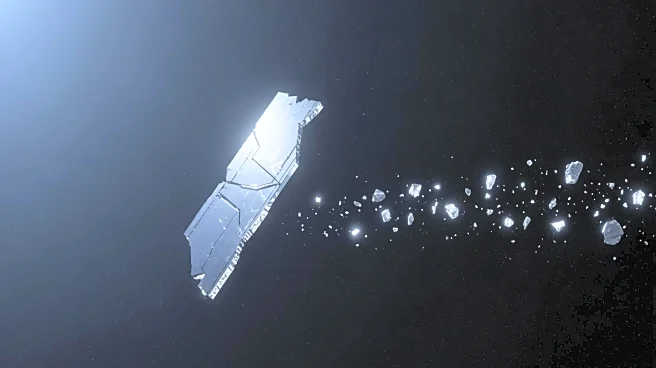
The European Space Agency (ESA) has initiated the Destructive Reentry Assessment Container Object (Draco) mission to study the reentry of spacecraft into Earth's atmosphere. The mission aims to gather data on how different materials behave as they burn
up, which could help in designing satellites that fully disintegrate, minimizing space debris. The Draco spacecraft, equipped with sensors and cameras, will collect data on temperature, strain, and pressure during its reentry. This mission is part of ESA's Zero Debris approach, which seeks to reduce the risk of space debris from satellite collisions. The data collected will guide the development of new technologies for more demisable satellites by 2030.
Why It's Important?
The Draco mission is significant for its potential impact on space sustainability and safety. By understanding how materials behave during reentry, engineers can design satellites that minimize debris, reducing risks to both space operations and people on the ground. The mission addresses the complex issues of safety and atmospheric pollution caused by reentry emissions. The data could lead to better reentry models and technologies, ultimately contributing to safer and more sustainable space exploration. This initiative is crucial as the number of satellites in orbit continues to grow, increasing the potential for collisions and debris.
What's Next?
The Draco mission is scheduled for 2027, with the spacecraft expected to reenter over an uninhabited ocean area. The mission will provide real-world data on spacecraft reentry, which is currently only simulated in labs. If successful, the data could lead to new lines of investigation and technological advancements in satellite design. The results will be eagerly awaited by researchers and could serve as a pathfinder for future in-situ observations of spacecraft fragmentation and ablation behavior.